Gary Saretzky Photo Books
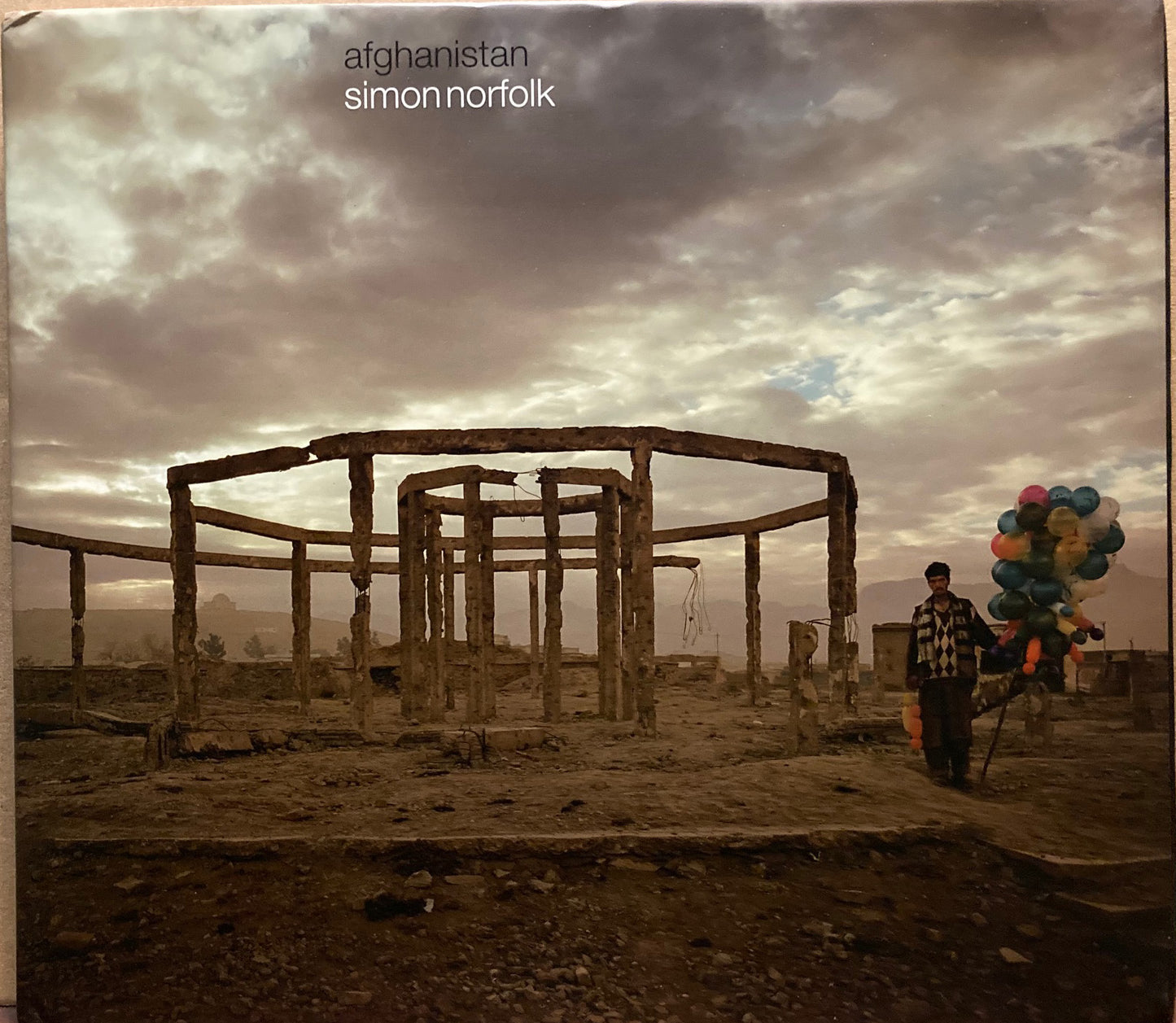
Norfolk, Simon. Afghanistan: Chronotopia by Simon Norfleet.
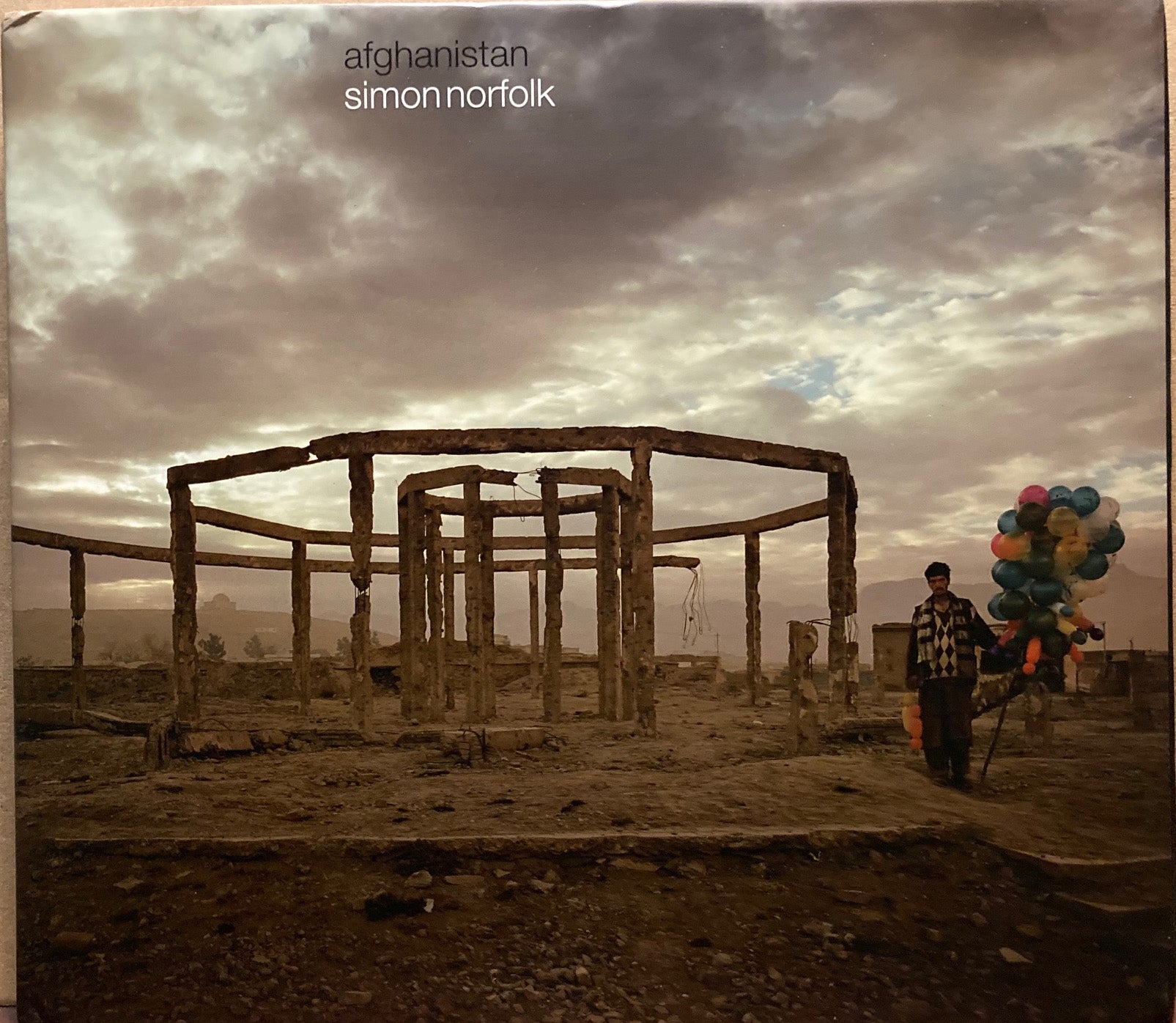
Norfolk, Simon. Afghanistan: Chronotopia by Simon Norfleet.
Impossible de charger la disponibilité du service de retrait
Dewi Lewis Publishing, 2002. [Large format monograph with color landscape photographs by Simon Norfolk in December 2001 and in May 2002 that won the European Publishers Award for Photography. Book issued in conjunction with exhibits in about a dozen galleries listed on the inner flap of the dust jacket.] Hardcover with dust jacket, lightly bumped on top and bottom of spine, otherwise fine. Summary:
Afghanistan: Chronotopia (published in 2002 by Dewi Lewis Publishing) is an internationally acclaimed monograph by British landscape and documentary photographer Simon Norfolk (frequently misattributed in early print listings as "Simon Norfleet"). The award-winning volume features large-format color photographs taken between December 2001 and May 2002, capturing the immediate aftermath of the U.S. and British aerial bombardments following the fall of the Taliban regime.
Core Content & Conceptual Framework
1. The Archaeology of War and Sedimentary Ruin
The central thesis of the book treats the physical environment of Afghanistan as a living museum of warfare. Norfolk avoids classic, fast-paced photojournalism, opting instead to use a large, slow-moving 4x5 cherrywood field camera. The narrative traces the literal stratification of twentieth-century conflict embedded in the topography, observing that different eras of destruction lie on top of one another like sedimentary rock layers:
-
The Soviet Strata: Rusted tanks, armored personnel carriers, and military hardware from the 1980s invasion left behind like ancient, mechanical fossils, often repurposed by locals as bridge footings or construction scraps.
-
The Civil War Strata: Faded, eroding ruins left behind from the intense factional and faction-led urban street fighting of the early 1990s.
-
The Smart Bomb Strata: Freshly scorched earth, shattered concrete, and twisted structural steel resulting from modern, high-yield American and British munitions.
2. The Theoretical Concept of the Chronotope
The subtitle Chronotopia draws directly from literary theorist Mikhail Bakhtin's concept of the "chronotope"—a site where spatial and temporal indicators fuse, making the passage of time visually manifest in a physical location. Norfolk frames the post-apocalyptic, largely unpopulated landscapes as environments where the viewer travels through space and history simultaneously. The architectural ruins are depicted as shattered mirrors reflecting the ghost-like shapes of past classical empires, evoking associations with ancient structures like Stonehenge, the Treasury at Petra, or the Pyramids of Giza.
3. The Subversion of Romantic Sublime
Norfolk intentionally references the painterly aesthetics of the Western artistic tradition, explicitly channeling the golden-hour light, soft color palettes, and expansive horizons found in the Renaissance and Romantic landscape paintings of Claude Lorrain and Caspar David Friedrich. However, the text deconstructs this visual beauty to challenge the viewer. Instead of inspiring spiritual awe through the raw power of nature or God, Norfolk uses the "battlefield sublime" to evoke dread, demonstrating the terrifying and indiscriminate capacity of modern military technology.
4. Forensic Landscape as Historical Truth
The closing portions of the monograph argue for the landscape itself as a vital piece of forensic evidence. By focusing on the structural devastation rather than graphic violence, the imagery highlights the deep human tragedies of a decades-long conflict where millions of lives were lost. The text challenges standard Western media narratives, emphasizing that the physical scars left on the land function as permanent, un-erasable testimonies to the civilian suffering and cultural destruction inherent to modern warfare.
Winner of the European Publishers Award for Photography, Afghanistan: Chronotopia is widely considered a foundational masterpiece of twenty-first-century documentary practice. By moving away from immediate, action-driven media documentation in favor of a quiet, deeply historical landscape approach, Norfolk's work fundamentally shifted how contemporary fine artists and photojournalists visually confront the systematic trauma of state-sponsored violence.