Gary Saretzky Photo Books
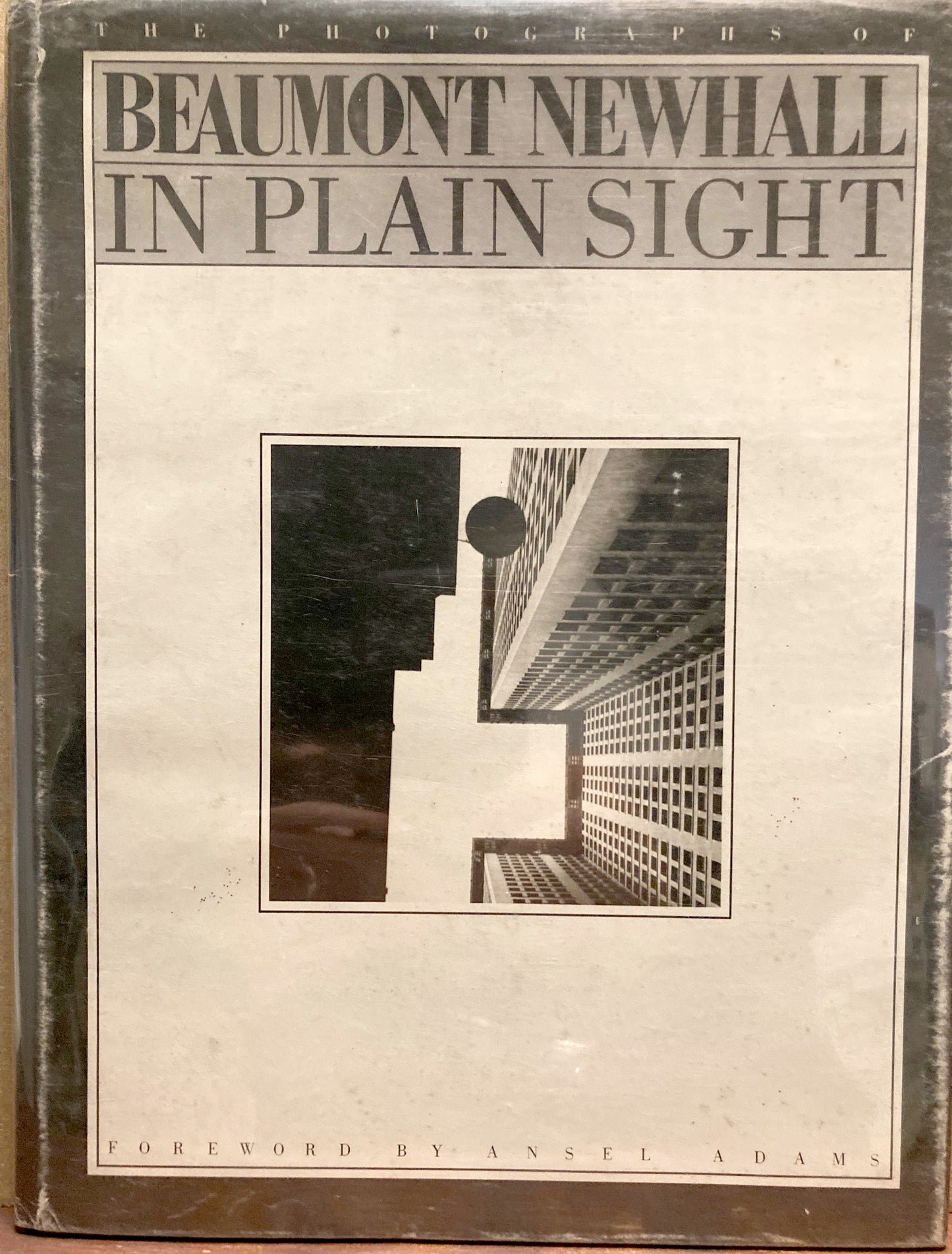
Newhall, Beaumont. In Plain Sight by Beaumont Newhall.
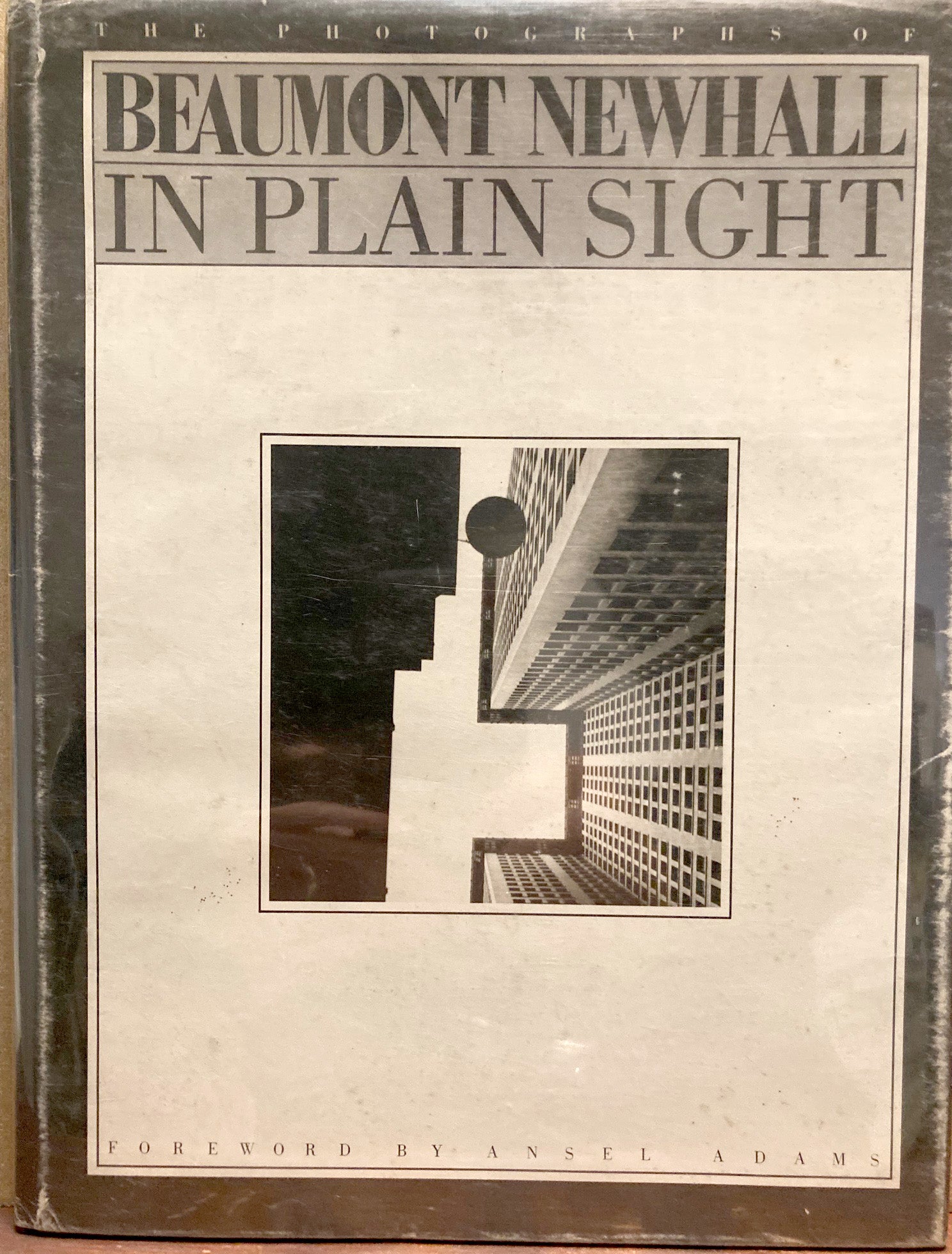
Newhall, Beaumont. In Plain Sight by Beaumont Newhall.
Impossible de charger la disponibilité du service de retrait
Peregrine Smith, 1983. Foreword by Ansel Adams. 1st edition. Fine with non-authorial gift inscription on front flyleaf. Protected price-clipped dust jacket has edge wear. [Better known for his writing on the history of photography, here is a selection of Newhall's own photographs, including portraits of notable photographers such as Edward Weston, Brett Weston, Ansel Adams, Bill Brand, Paul Strand, Charles Sheeler, Henri Cartier-Bresson, and Arthur Siegel.]
Beaumont Newhall (1908–1993) was an influential American art historian, curator, author, and photographer who played a preeminent role in establishing photography as a legitimate discipline within art history. Born in Lynn, Massachusetts, Newhall earned his undergraduate and master's degrees in art history from Harvard University before being appointed librarian at the Museum of Modern Art (MoMA) in New York in 1935. In 1937, he curated MoMA's landmark retrospective Photography 1839–1937, accompanied by a catalog that he expanded into his seminal textbook The History of Photography, which remained the definitive reference on the subject for generations. Appointed MoMA’s first Curator of Photography in 1940, Newhall served until 1947, later serving as Director of the George Eastman House in Rochester, New York (1958–1971), and co-founding Aperture magazine in 1952 alongside his wife Nancy Newhall, Ansel Adams, and Minor White. Beyond his curatorial scholarship, Newhall maintained a lifelong practice as an accomplished photographer; adopting the Leica 35mm camera in the 1930s, he produced refined architectural studies, urban street scenes, and insightful, intimate portraits of artist friends such as Henri Cartier-Bresson, Edward Weston, and Paul Strand. Honored with a MacArthur Fellowship in 1984, his personal photographs, extensive writings, and archival collection are preserved at the Center for Creative Photography at the University of Arizona and the Getty Research Institute.
In Plain Sight: The Photographs of Beaumont Newhall (1983), published by Gibbs M. Smith / Peregrine Smith Books, is a retrospective monograph that shifts the spotlight onto Beaumont Newhall's own creative work as a photographer, rather than his legendary career as a curator and photo historian.
The volume features a foreword by Newhall's close friend and peer, Ansel Adams, alongside an introduction and personal commentary written by Newhall himself, pairing 59 full-page black-and-white photographic plates with his reflections.
Core Themes & Content
-
The Historian as Maker: The central premise of the book explores Newhall's dual identity. He famously notes that practicing photography was a vital tool for his scholarship, stating, "It has been important to me, as an historian of photography, to understand photography by photographing."
-
The Camera as a Personal Journal: Rather than chasing dramatic or staged imagery, Newhall treats the camera like a writer's diary. The collection captures a quiet, running record of things he encountered and experienced throughout his vast travels and daily life.
-
The "Usual Seen Unusually": Reflecting his lifelong devotion to "straight photography" (sharp focus, clear composition, and zero artificial manipulation), the book focuses on finding beauty in ordinary, overlooked subjects. His images examine structural architecture, landscapes, street scenes, and portraits encountered "in plain sight."
-
A Technical Exploration of the Medium: The production of the monograph was deeply controlled by Newhall to mirror the exact technical principles he championed. Using specialized duotone printing techniques on high-grade paper, the book replicates the luminous whites, rich ebony blacks, and crisp detail of his original silver gelatin prints.
In Plain Sight reintroduces one of the 20th century's most formidable academic gatekeepers as an accomplished visual artist in his own right. It proves that Newhall didn't just understand the rules of photographic mastery from a distance—he lived them behind the lens, capturing the world with the same precision and respect for the medium that he demanded from the masters in his museum galleries.