Gary Saretzky Photo Books
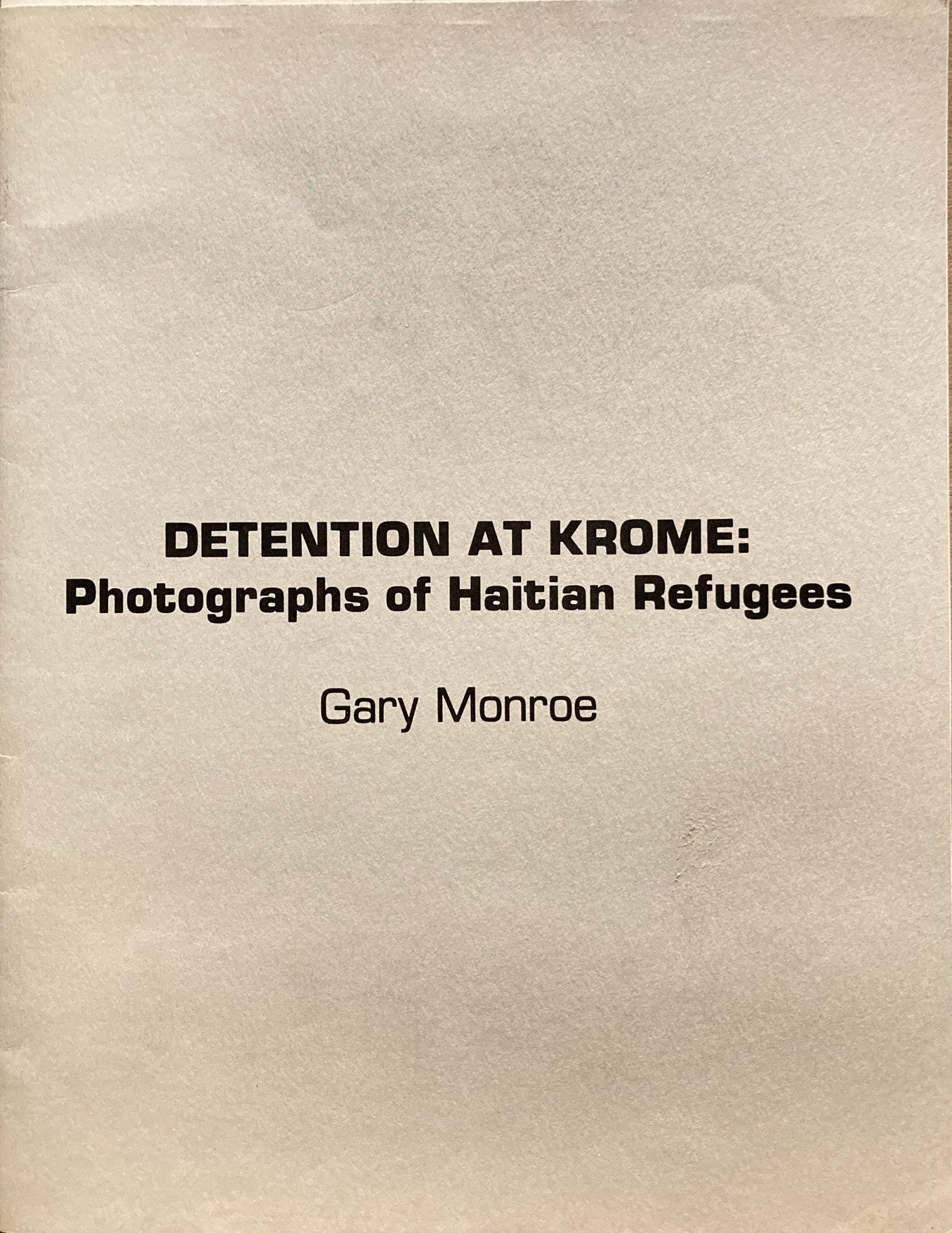
Monroe, Gary. Detention at Krome: Photographs of Haitian Refugees by Gary Monroe. September 3-29, 1982.
Monroe, Gary. Detention at Krome: Photographs of Haitian Refugees by Gary Monroe. September 3-29, 1982.
Impossible de charger la disponibilité du service de retrait
Miami-Dade Community College, 1982. Wraps, exhibition catalog for exhibit at Miami-Dade Community College, North Campus, very good with small abrasion on front cover, otherwise fine. 18 black-and-white illustrations. Texts by Renee Landes and Kathleen Gurucharri. Concerns plight of Haitian boat people confined to Krome Resettlement Camp on the edge of the Everglades. Monroe was only photographer permitted into Krome on a free-inquiry basis and worked there for more than a year. Related photocopy of a clipping from Miami Herald laid in along with a signed letter from the curator, Renee Landes. Scarce. Summary:
Detention at Krome: Photographs of Haitian Refugees is an 18-page exhibition catalog documenting a powerful solo photography exhibition by documentary photographer Gary Monroe. Hosted from September 3 to September 29, 1982, at The Gallery of Miami-Dade Community College (North Campus), this publication serves as a stark, immediate visual record of the federal government’s controversial mass-detention policies targeting Haitian asylum seekers during the early 1980s.
Overview of the Catalog
-
The Photographer: Gary Monroe is an acclaimed Florida documentary photographer best known for his long-term visual studies of vulnerable subcultures, immigrant communities, and regional history across the state.
-
The Venue: Miami-Dade Community College served as an essential cultural epicenter for this specific showcase, positioning the visceral images directly within the South Florida community most impacted by the ongoing Caribbean migration crisis.
-
Content & Structure: This slim, softcover catalog compiles a select portfolio of raw, black-and-white documentary photographs taken inside the walls of the Krome North Detention Center, an immigration facility located on the edge of the Florida Everglades.
Historical and Artistic Context
The exhibition opened at a moment of intense political and humanitarian crisis, functioning as an artistic challenge to a highly secretive federal detention apparatus.
-
Inside a Hidden Facility: During the early 1980s, the Reagan administration shifted its immigration approach toward strict deterrence, placing arriving Haitian "boat people" into indefinite confinement. Monroe secured rare, critical access to photograph inside Krome, capturing the human faces behind a heavily restricted environment.
-
The Human Face of Confinement: Rather than treating his subjects as statistical data or media caricatures, Monroe’s photographs emphasize individual dignity and psychological weight. The images capture detainees passing "dead time" in crowded barracks, wearing ordinary street clothes, navigating razor-wire perimeters, and waiting through prolonged legal limbo.
-
A Witness to Resistance: The exhibition occurred directly on the heels of major historic uprisings, hunger strikes, and escape attempts organized by Haitian activists inside Krome, providing immediate visual gravity to the contemporary national debate over human rights, race, and asylum policy.
