Gary Saretzky Photo Books
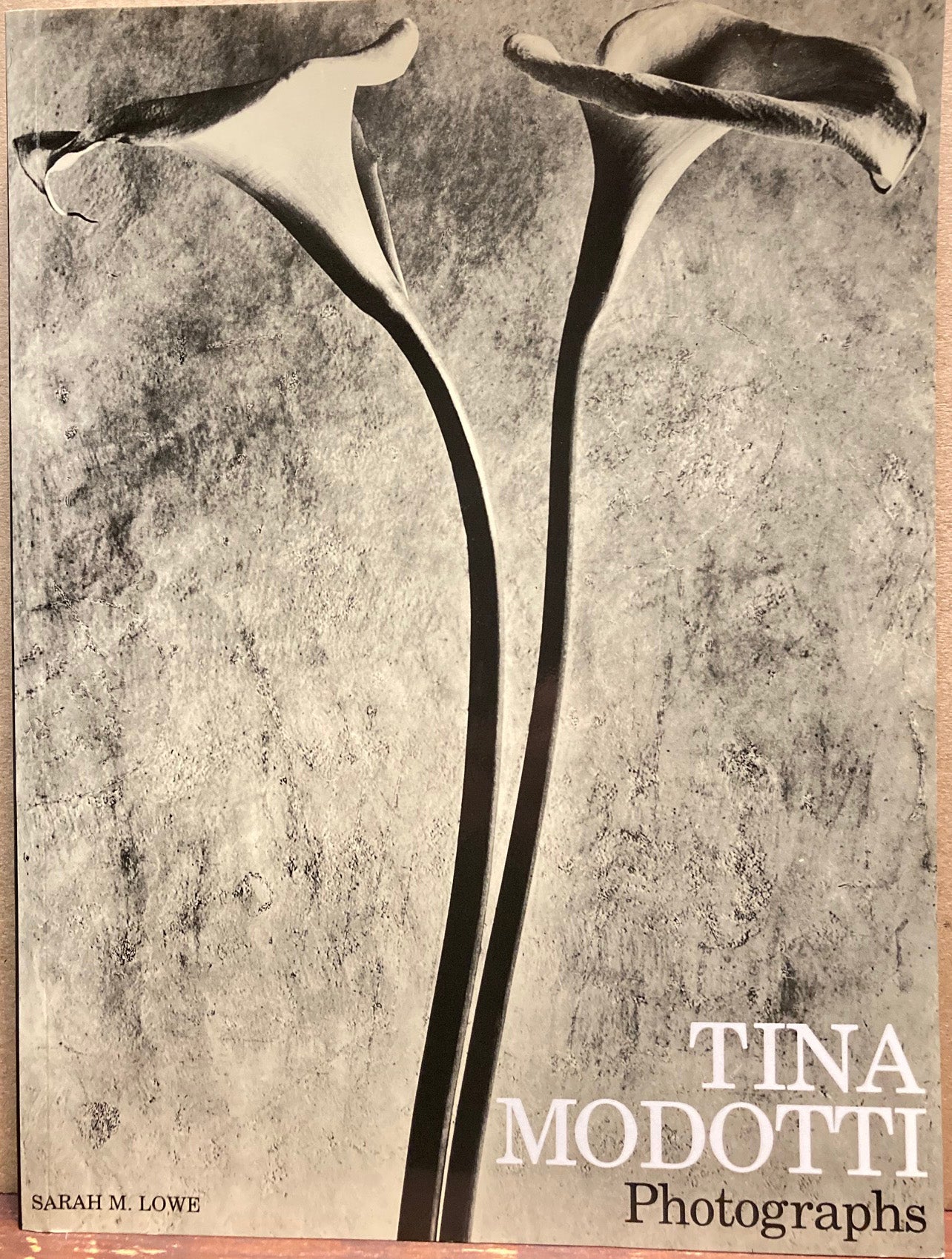
Modotti, Tina. Tina Modotti: Photographs, by Sarah M. Lowe.
Modotti, Tina. Tina Modotti: Photographs, by Sarah M. Lowe.
Impossible de charger la disponibilité du service de retrait
Abrams/Philadelphia Museum of Art, 1995. [Extensive biographical information and 119 full page illustrations. Includes photographs of Modotti's lover and mentor in photography, Edward Weston.] Stiff illustrated wraps, like new.
Born in Italy August 16 or 17, 1896, Tina Modotti arrived in California in 1913. She became a model and actress and married artist Roubaix “Robo” de l’Abrie Richey in 1918. After his death in 1922, she moved to Mexico City, where she operated a portrait studio with her lover, photographer Edward Weston. Although taught technique by Weston, she developed her own personal vision, expressed in photographs fueled by her passionate sympathy for the hard life of the poor and her love of art and Mexican crafts. After Weston’s departure in 1926, Modotti became increasingly active in revolutionary politics, leading to her deportation in 1930. She became a Comintern agent and was active in organizing medical services during the Spanish Civil War before returning to Mexico in 1939. Tina Modotti died in Mexico City on January 6, 1942, shortly after boarding a cab at midnight on the night of January 5. Book summary:
Tina Modotti: Photographs is a 160-page comprehensive monograph and critical art-historical catalog written by art historian and curator Sarah M. Lowe. Published in association with the Philadelphia Museum of Art, the book serves as the companion to a major retrospective exhibition of Modotti’s work.
Overview of the Book
-
The Subject: Tina Modotti was an Italian-born actress, artist, and Marxist revolutionary whose photography career spanned an intense but remarkably brief seven-year window in Mexico.
-
Content & Structure: The volume features 148 high-quality duotone illustrations representing the full creative range of Modotti's aesthetic imagination, including dozens of images that had rarely or never been reproduced prior to publication.
-
The Text: The visuals are anchored by an exhaustive biographical and critical essay by Lowe, who tracks Modotti's journey from the bohemian communities of San Francisco and Los Angeles to the radical artistic and political circles of post-revolutionary Mexico.
Core Philosophical and Visual Themes
Lowe’s scholarship frames Modotti not merely as a tragic romantic figure, but as a rigorous, innovative artist who deliberately fused cutting-edge formal modernism with militant social activism.
-
The Evolution from Weston: The book charts Modotti’s early training under legendary American photographer Edward Weston, exploring how she quickly outgrew his strict, detached aesthetic formalism to carve out an independent, socially grounded artistic identity.
-
Revolutionary Icons: Highlighted heavily are Modotti’s striking, symbolic still-life compositions. These unique arrangements merge high modernist geometry with political propaganda by combining stark, everyday symbols of agrarian labor and resistance, such as an ear of corn, a guitar, a sickle, and a bandolier.
-
The People of Mexico: The catalog foregrounds Modotti's humanistic street photography, capturing indigenous Mexican workers, maternal portraits, folk art, and urban architectures. Rather than presenting these subjects through a lens of standard tourist exoticism, her compositions treat the marginalized working class with profound dignity, clarity, and revolutionary intent.
