Gary Saretzky Photo Books
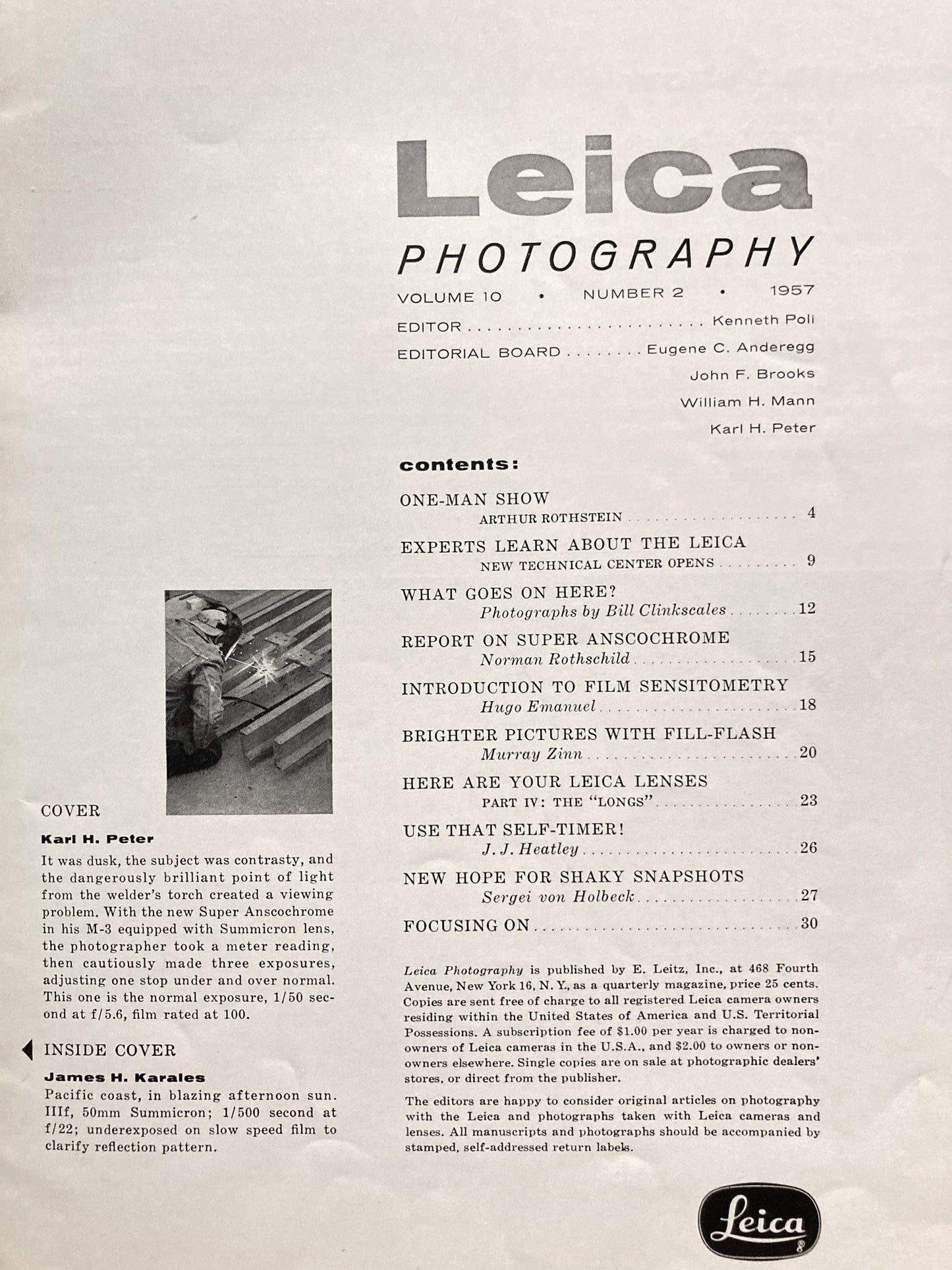
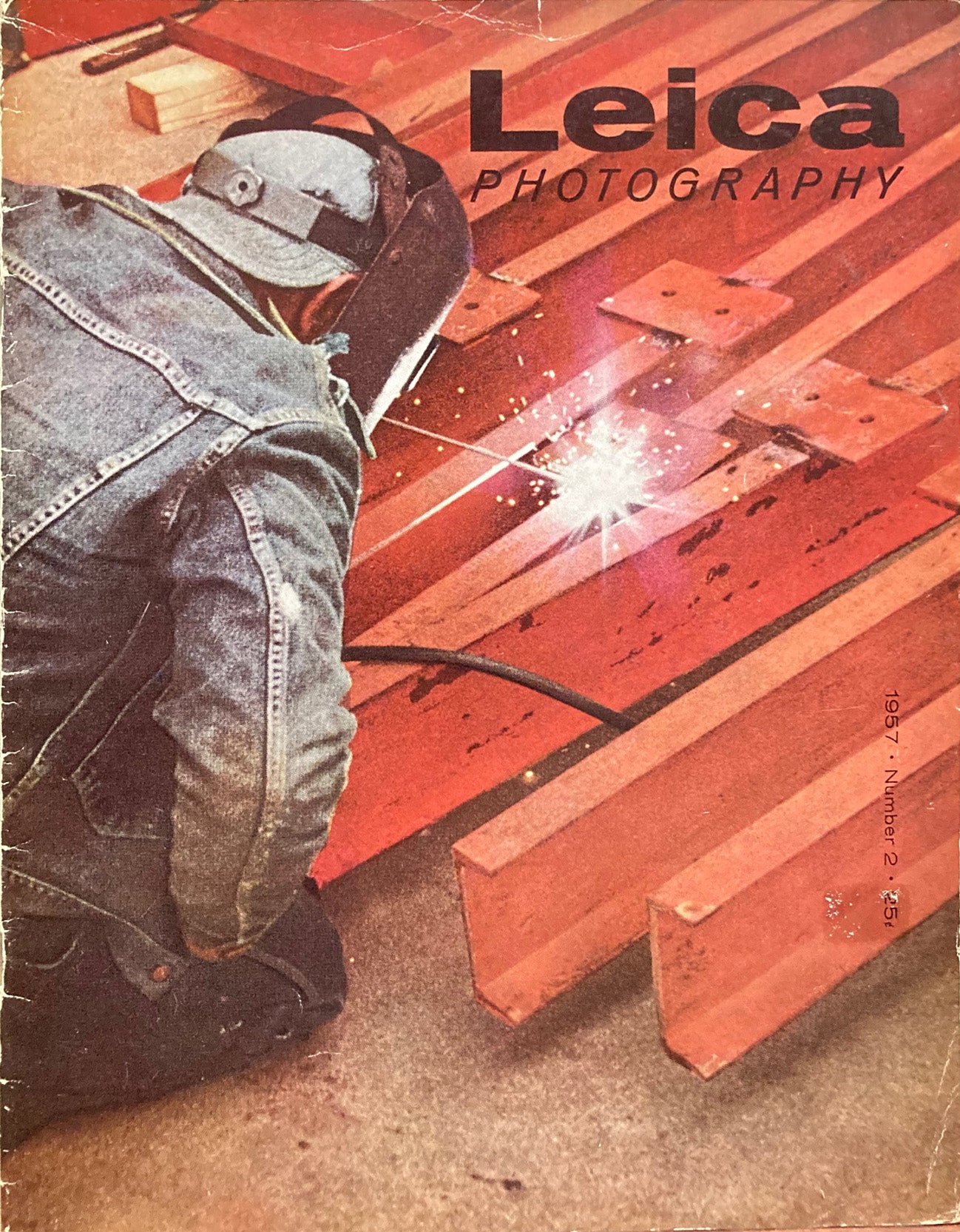
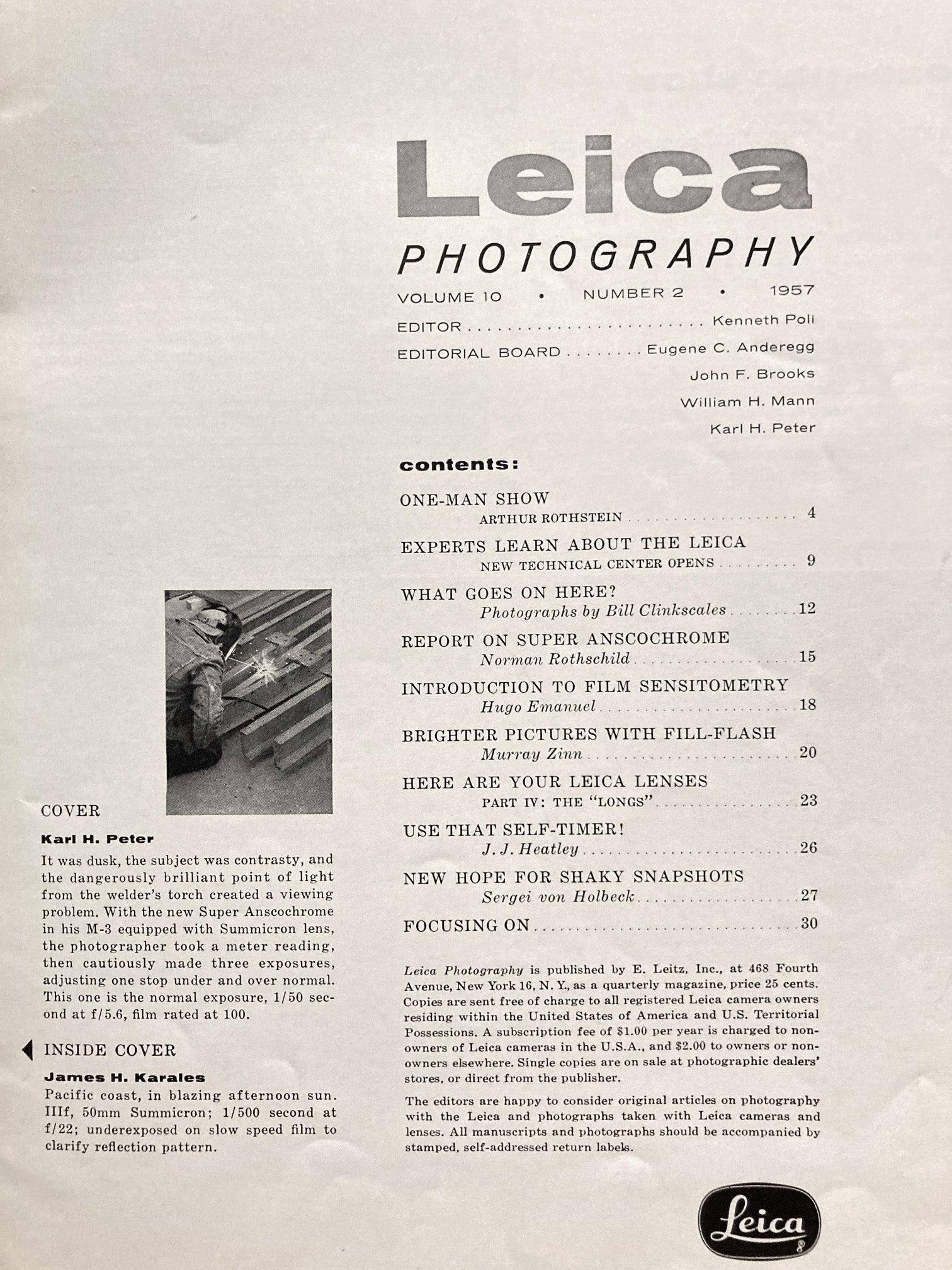
Leica. Leica Photography. Volume 10, No. 2, 1957. Arthur Rothstein feature.
Leica. Leica Photography. Volume 10, No. 2, 1957. Arthur Rothstein feature.
Impossible de charger la disponibilité du service de retrait
Includes “One-Man-Show” by Beaumont Newhall with photos and text from Arthur Rothstein’s retrospective at the George Eastman House in 1956. [No. 199 in Newhall's bibliography of his first 632 publications where it is entitled, "Arthur Rothstein: Photojournalist."] Other articles about Leica cameras, Super Anscochrome fllm, using fill flash, et al. Very good with light edge wear, entire issue 30 pages. Summary:
Leica Photography (Volume 10, No. 2, 1957) is a vintage 30-page issue of the specialized quarterly magazine published by E. Leitz, Inc. in New York. Operating as both an artistic showcase and an equipment handbook, this mid-century edition explores emerging film technologies and foundational documentary aesthetics of the era.
Core Themes and Content
-
The Arthur Rothstein Feature: The issue’s prominent centerpiece is the feature "Arthur Rothstein: Photojournalist," written by legendary photo historian Beaumont Newhall. Subtitled as a "One-Man-Show," the text and accompanying portfolio celebrate Rothstein’s landmark 1956 retrospective exhibition at the George Eastman House. Newhall critically analyzes Rothstein’s immense legacy—ranging from his iconic, empathetic 1930s Dust Bowl imagery for the Farm Security Administration (FSA) to his mastery of post-war picture stories as the Director of Photography for Look magazine.
-
Super Anscochrome Innovation: This edition highlights a major technical milestone of the late 1950s: the introduction of Super Anscochrome color film. Articles detail the capabilities of this revolutionary high-speed color reversal stock, providing Leica users with practical guidance on managing exposure, saturation, and grain when shooting action or low-light scenes in color.
-
Technical and Gear Guides: True to the publication's instructional format, the issue features specialized guides tailored to rangefinder cameras. It includes deep dives into balancing illumination using fill flash, maximizing the performance of contemporary Leitz lenses, and navigating the nuances of 35mm film processing.
The issue remains a coveted historical document for collectors, capturing a vital bridge between the classical era of documentary photojournalism and the rapidly evolving technology of mid-century color photography.
Arthur Rothstein (1915–1985) was a premier American photojournalist and educator whose prolific five-decade career cemented his status as a master of visual sociology and communications. Born in New York City, he graduated from Columbia University, where he co-founded the university camera club and worked alongside economist Roy Stryker. When Stryker moved to Washington D.C. to head the photographic unit of the Farm Security Administration (FSA) in 1935, Rothstein became the agency's first staff photographer, spending five years creating a definitive, deeply empathetic documentary record of the Great Depression, including iconic images of Dust Bowl dust storms and displaced tenant farmers. During World War II, he served as a photo officer in the U.S. Army Signal Corps, documenting the theater of war across India and China. Following his military service, Rothstein joined Look magazine, serving as its Director of Photography for twenty-five years until the magazine ceased publication in 1971, where he pioneered technical innovations in photojournalism and advanced the art of the editorial picture essay. A passionate advocate for the preservation and recognition of photography as a fine art, he authored nine authoritative books on photojournalism, mentored generations of students at Columbia and Syracuse Universities, and finished his distinguished career as an executive editor for Parade magazine.