Gary Saretzky Photo Books
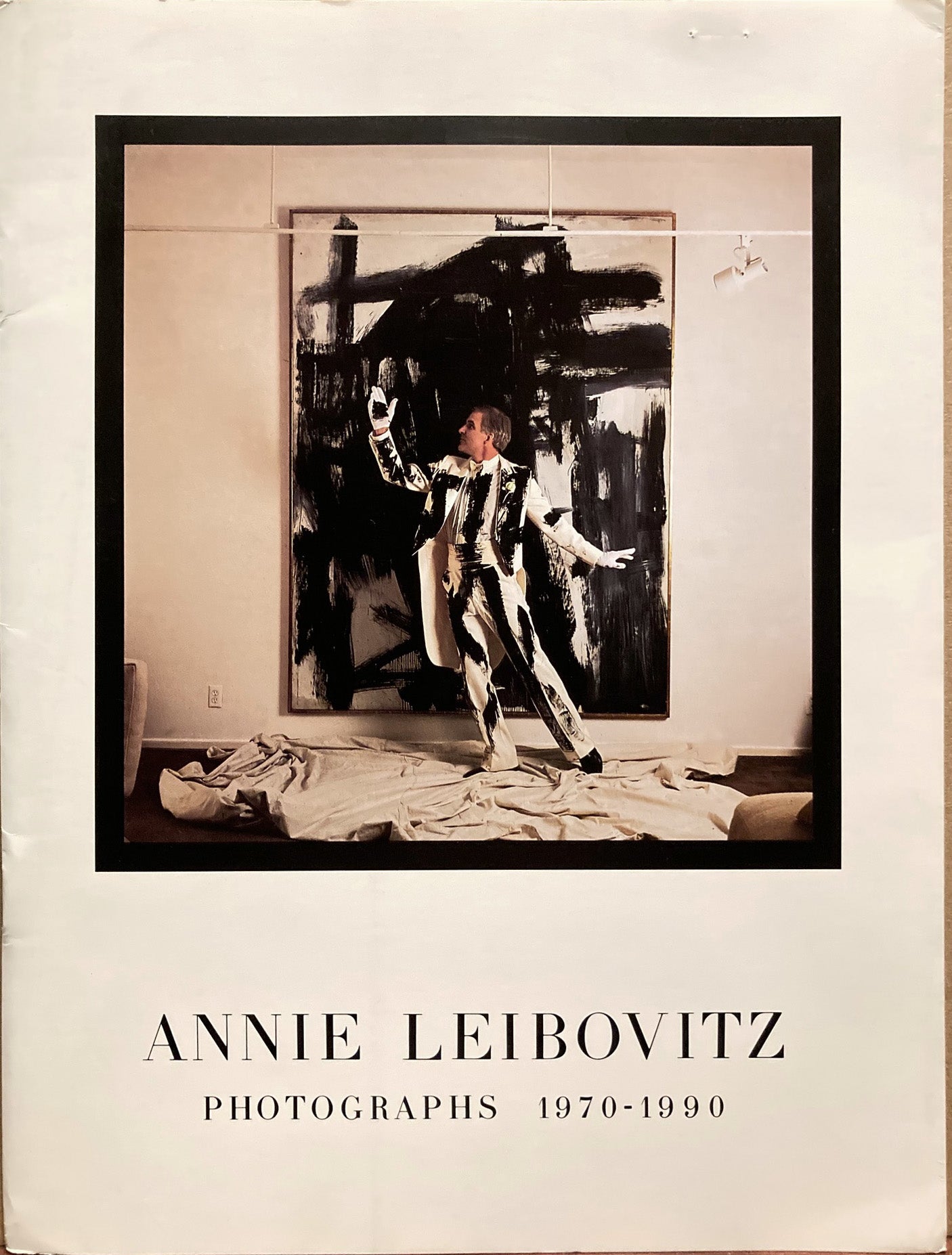
Leibovitz, Annie. Annie Leibovitz: Photographs, 1970-1990.
Leibovitz, Annie. Annie Leibovitz: Photographs, 1970-1990.
Impossible de charger la disponibilité du service de retrait
An exhibition organized by the International Center of Photography, New York, in conjunction with the National Portrait Gallery, Smithsonian Institution, Washington, D.C. ICP/NPS, 1991. Texts by Willis Hartshorne and William F. Stapp. Portraits in black-and-white and color (from Cibachrome prints) include Steve Martin, Greg Louganis, Tammy Wynette, Louis Armstrong, Tennessee Williams, Mick Jagger, Patti Smith, Muhammad Ali, Robert Penn Warren, Tess Gallagher, John Lennon and Yoko Ono, Peter Tosh, John Malkovich, Sam Shepard, Beth Henley, William Dafoe, Bruce Springsteen, Ella Fitzgerald, Peter Sellers, Peter Matthiessen, and Mikhail Baryshnikov. Stiff illustrated French wraps, list of works laid in, Compliments of ICP slip laid in (formerly stapled to front cover). Includes Chronology of the artist. Other than the two staple holes, near fine. Summary:
Annie Leibovitz: Photographs, 1970–1990 is a monumental, 232-page exhibition monograph and catalog published by HarperCollins to accompany a major traveling retrospective originating in 1991. Co-sponsored by the International Center of Photography and the National Portrait Gallery, the publication tracks Leibovitz's evolution from a gritty, counterculture photojournalist into the world's premier celebrity portraitist.
Core Themes and Content
-
The Rolling Stone Years (1970–1983): The first half of the volume focuses on her raw, black-and-white documentary work as the chief photographer for Rolling Stone magazine. It captures the unvarnished, behind-the-scenes energy of American pop culture, rock musicians, and political campaigns, including her historic coverage of the Rolling Stones' 1975 tour and her iconic final portrait of John Lennon and Yoko Ono.
-
The Vanity Fair Transition (1983–1990): The second half chronicles her shift to highly staged, theatrical, and saturated color portraiture for Vanity Fair and major advertising campaigns. This section showcases her signature style of collaborative portraiture, where subjects are placed in meticulously designed, conceptual, and often surreal tableaus that reflect their public personas.
-
The Intersection of Art and Commerce: The curated selection explores how Leibovitz dismantled the boundaries between editorial journalism, commercial advertising, and fine-art portraiture, redefining the visual language of fame, power, and American celebrity culture at the end of the 20th century.
-
Curatorial Framing: The monograph features a critical essay by Ingrid Sischy, who contextualizes Leibovitz's massive cultural impact, alongside an insightful interview with the artist discussing her technical processes, psychological approach to subjects, and personal memories of the era.
The publication stands as a definitive historical record of a transformative twenty-year block of American portraiture, cementing Leibovitz’s legacy as an unparalleled chronicler of contemporary culture.
Annie Leibovitz (born 1949) is a legendary American portrait photographer whose bold, distinctive style and iconic images have made her one of the most celebrated chroniclers of popular culture and public figures of the modern era. Born in Waterbury, Connecticut, she studied painting at the San Francisco Art Institute before discovering her passion for photography. In 1970, she began her professional career at Rolling Stone magazine, quickly rising to become its chief photographer in 1973—a position she held for a decade while defining the magazine’s raw, intimate, and countercultural visual aesthetic. In 1983, Leibovitz joined the staff of Vanity Fair and later Vogue, where she revolutionized celebrity portraiture by transitioning from gritty photojournalism to highly staged, theatrical, and sumptuously saturated color tableaus that blend fine art with commercial editorial design. Over her storied career, she has captured defining portraits of figures ranging from John Lennon, Demi Moore, and Whoopi Goldberg to Queen Elizabeth II and Barack Obama, frequently collaborating with her subjects to place them in surreal, psychologically resonant concepts. The first woman to hold a solo exhibition at the National Portrait Gallery in 1991, Leibovitz has published numerous landmark monographs, received the Royal Photographic Society's Centenary Medal, and is designated a Living Legend by the Library of Congress, cementing her enduring influence on American visual culture.
