Gary Saretzky Photo Books
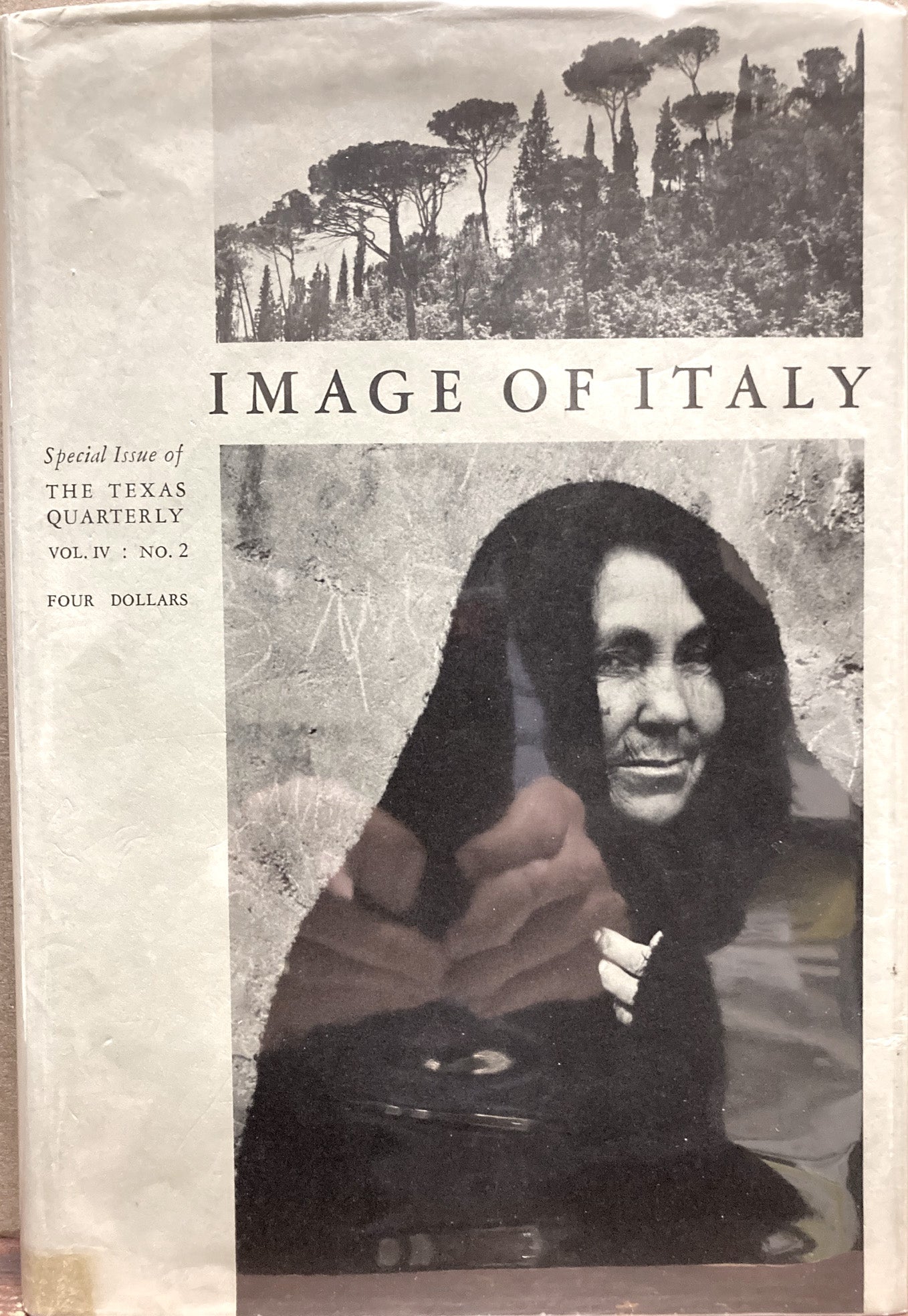
Lee, Russell. Image of Italy. Special Issue of The Texas Quarterly, Vol. IV, No. 2. 1961.
Lee, Russell. Image of Italy. Special Issue of The Texas Quarterly, Vol. IV, No. 2. 1961.
Impossible de charger la disponibilité du service de retrait
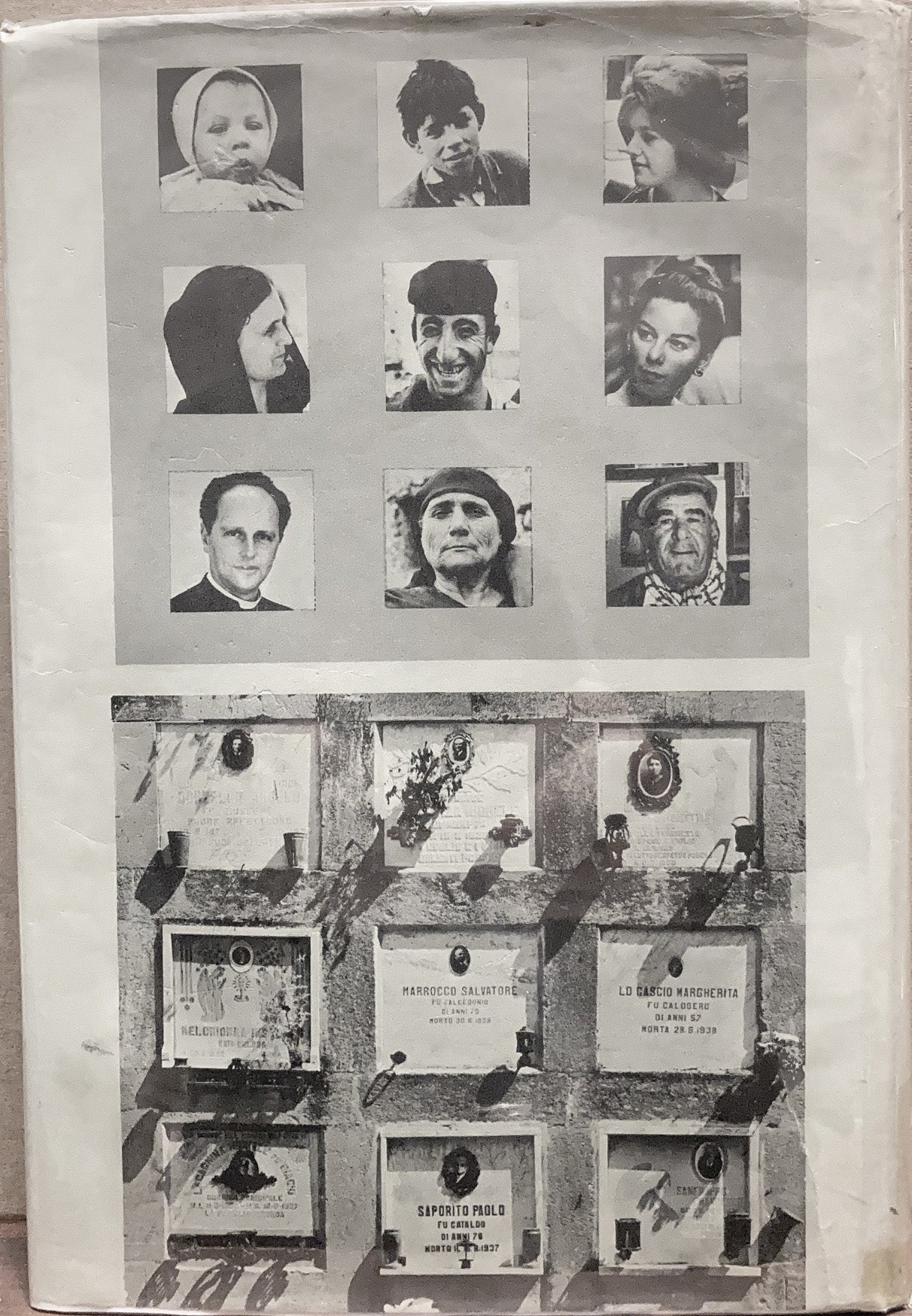
Edited by William Arrowsmith with photographs by Russell Lee. [150 very fine black-and-white photographs, mostly candid shots of people, by the highly esteemed photographer.] Hardcover edition (also published in paperback, which lacks the text on the inner front flap of the dust jacket), green cloth, with some wear at bottom edge, ex-library with dust jacket that has a tear at bottom of rear cover near spine. Usual library evidence. Front hinge split but still attached. Dust jacket faded at spine, with new protector. Uncommon in hardcover. (Reflections in image of cover.) Summary:
mage of Italy (published as an expanded, 267-page special issue of The Texas Quarterly, Summer 1961, Vol. IV, No. 2) is a landmark interdisciplinary cultural survey edited by the renowned classical scholar and translator William Arrowsmith. Designed to challenge superficial, postcard-style tourist tropes of post-war Europe, the volume serves as a dense, multifaceted portrait of Italy’s complex mid-century soul, capturing the deep friction between its ancient, rural traditions and the rapid modern advancements of the era.
Core Themes and Content
-
The Russell Lee Portfolio: The visual backbone of the issue is an extensive photographic essay by legendary documentary photographer Russell Lee. Commissioned by Arrowsmith on behalf of the University of Texas, Lee spent two and a half months traveling across the Italian peninsula in 1960, capturing roughly 4,000 frames. The special issue curates 150 of these striking, candid images. True to his social-realist background, Lee shuns glossy monuments to focus on the textures of daily life, capturing street scenes, working-class laborers, café culture, and the quiet dignity of ordinary citizens in both booming urban centers and impoverished southern villages.
-
Literary and Intellectual Anthology: The volume brings together translation anthologies, political essays, and creative pieces from Italy's most prominent mid-century literary minds. Contributors include iconic writers and thinkers such as Cesare Pavese, Carlo Levi, Ignazio Silone, and Vitaliano Brancati. Their writings explore the lingering psychological scars of fascism, the realities of post-war reconstruction, and the unique regional identities that divide the Italian North and South.
-
A "Psychic Geography" of a Nation: Rather than organizing the issue as a standard travelogue, Arrowsmith arranges the texts and images to form a cohesive thematic collage. The publication explores topics such as religious devotion, localized political movements, agrarian life, and the existential exhaustion of contemporary Italian intellectuals navigating a rapidly commercializing world.
By combining the analytical eyes of Italy's greatest modern writers with the empathetic, documentary lens of an American master, this special edition of The Texas Quarterly stands as a monumental historical and artistic archive of a country undergoing massive cultural transformation.
Russell Lee (1903–1986) was an acclaimed American documentary photographer and educator, best known for his incredibly prolific work with the Farm Security Administration (FSA) during the Great Depression. Born in Ottawa, Illinois, Lee initially earned a degree in chemical engineering from Lehigh University and worked in industry before abandoning engineering to study painting, which ultimately led him to photography in 1935. Joining the FSA photographic team in 1936 under Roy Stryker, Lee became the agency's most technically precise and travel-heavy photographer; he pioneered the use of multiple-flash photography to crisply illuminate indoor spaces, capturing thousands of candid, extraordinarily detailed images of everyday domestic life, small-town communities, and migrant labor camps—including his famous 1940 photo-essay of Pie Town, New Mexico. During World War II, he served as a captain in the Air Transport Command, documenting global supply routes across the Pacific and Europe, and in 1946, he created a monumental survey of health and safety conditions in American coal mining communities for the Department of the Interior. Settling in Texas in 1947, Lee continued working as an industrial and editorial photographer before becoming the first instructor of photography at the University of Texas at Austin in 1965, where he spent a decade mentoring generations of students and cementing his legacy as a deeply empathetic visual historian of the American working class.
