Gary Saretzky Photo Books
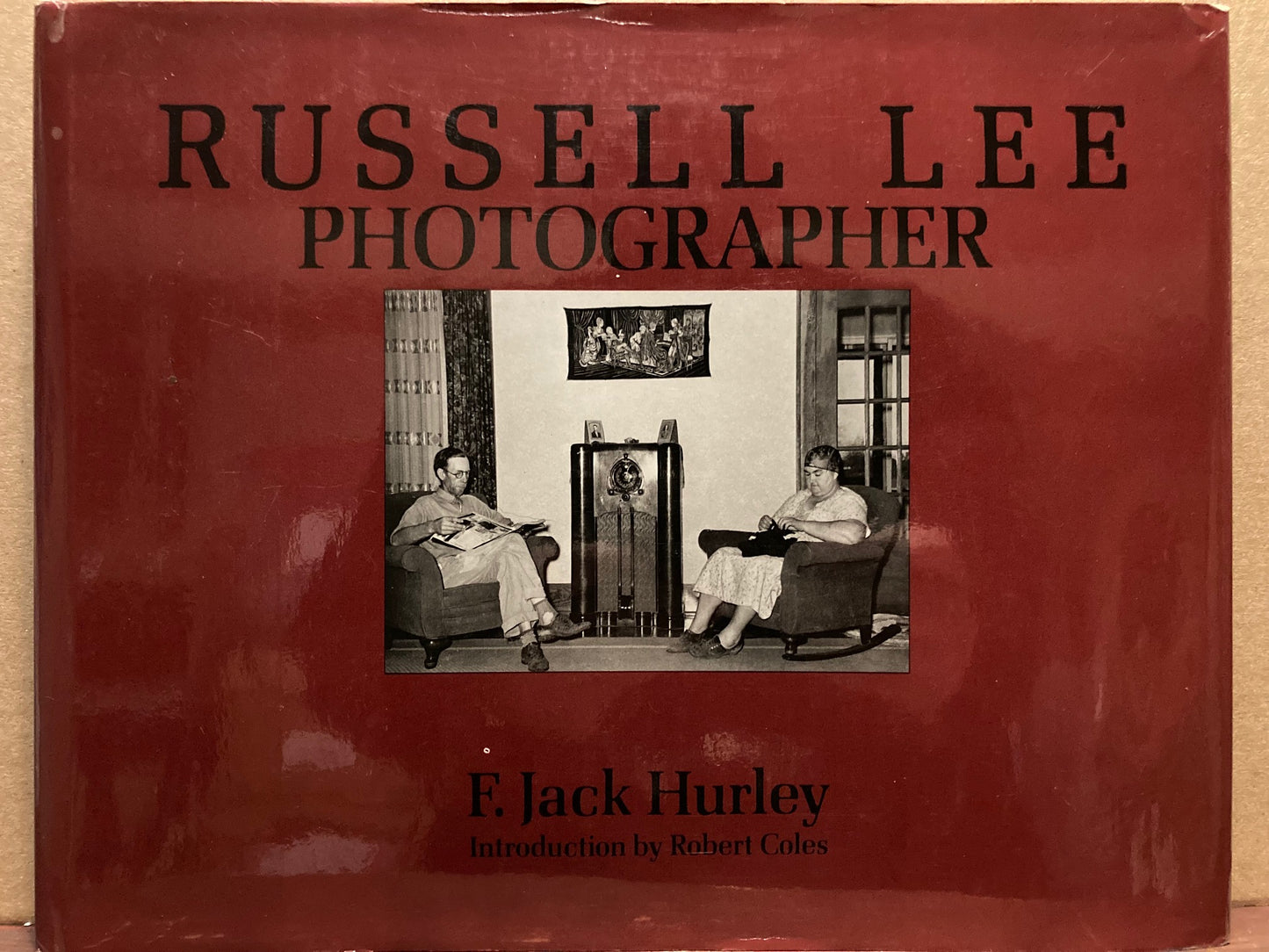
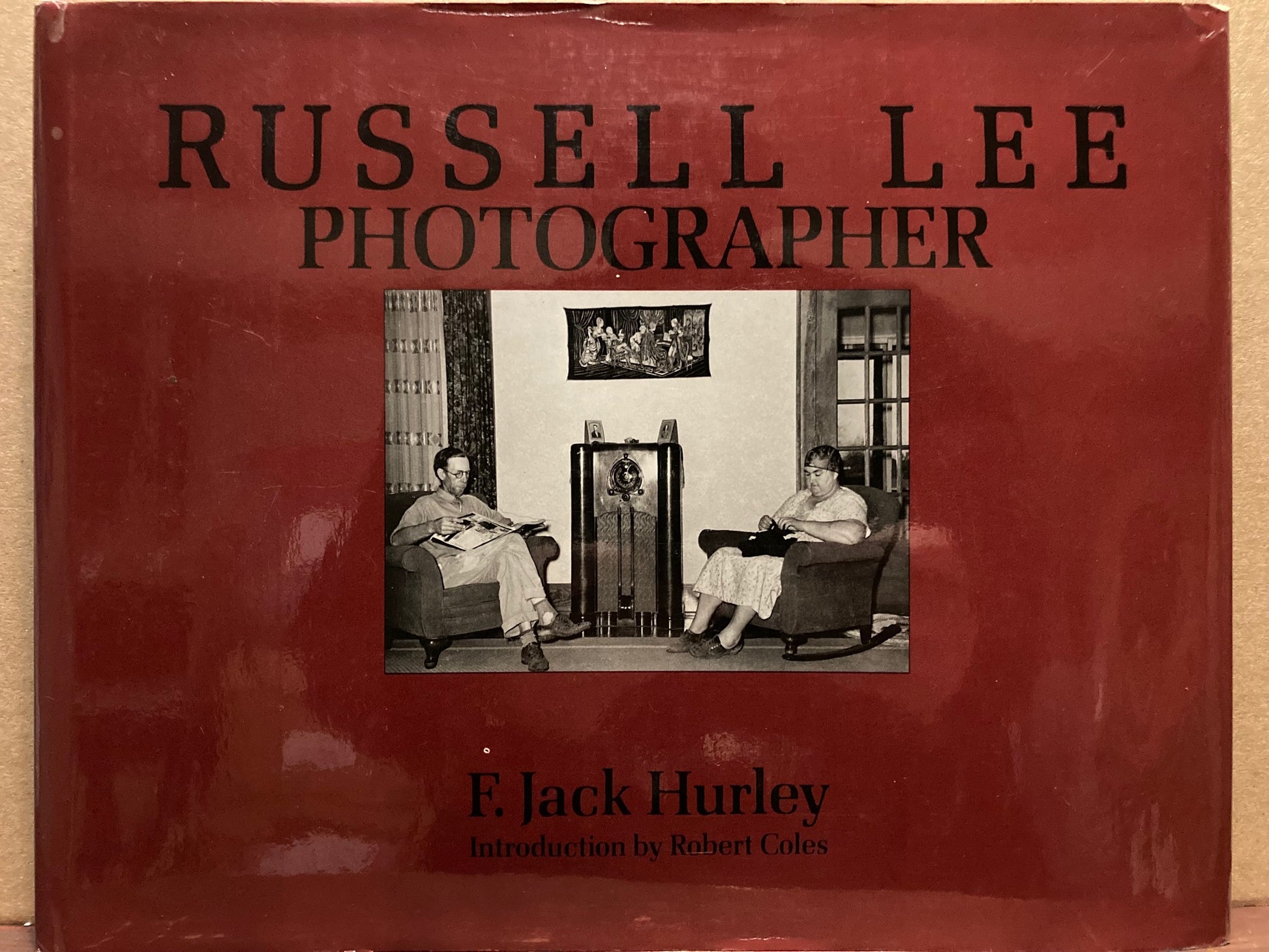
Lee, Russell. Russell Lee, Photographer by F. Jack Hurley.
Lee, Russell. Russell Lee, Photographer by F. Jack Hurley.
Impossible de charger la disponibilité du service de retrait
Morgan & Morgan, 1978. Introduction by Robert Cole. [Photographs in sections entitled, The Early Years; The F.S.A. Years; Air Transport Command; Mine Health and Safety; Industrial Photography; The Italian Portfolio; and Texas]. Red cloth, fine with protected near fine dust jacket. 207 pages. 1st edition (unstated). (Reflections in image of cover.)
Russell Lee, Photographer (published in 1978 by Morgan & Morgan) is an authoritative, 206-page monograph written by photo historian F. Jack Hurley, with an introduction by renowned child psychiatrist and author Robert Coles. As the first comprehensive, book-length retrospective dedicated to Russell Lee, this volume serves to elevate him beyond just a secondary figure of the New Deal era, establishing him as an extraordinarily sensitive, technically peerless titan of American documentary photography.
Core Themes and Content
-
Seven Decades of Visual Chronology: The book is structured into seven distinct chapters that trace Lee’s career far beyond his famous Great Depression work. It maps his trajectory chronologically through: The Early Years (his transition from chemical engineering to painting, and finally to a camera), The F.S.A. Years, Air Transport Command (his global logistics work during World War II), Mine Health and Safety (his grueling 1946–1947 survey of coal mining towns), Industrial Photography, The Italian Portfolio (his 1960 assignment capturing post-war Italy), and Texas (his twilight years as an academic and regional documentarian).
-
The "Technician with a Heart": Hurley analyzes Lee's unique philosophy, contrasting his background as a trained scientist and painter with other iconic Farm Security Administration (FSA) photographers. The text highlights how Lee used direct and multiple flashbulbs to beautifully illuminate bleak interior spaces that others left in shadow. Hurley argues that this technical precision allowed Lee to treat his subjects with unparalleled dignity, rendering the small details of their homes, meals, and workspaces with extreme, honest clarity.
-
Mastery of the Photo Essay: The volume details Lee's gift for "shooting around" a subject to create complete narrative visual packages. Rather than relying on single, dramatic, iconographic images, the monograph showcases Lee’s ability to thoroughly document an entire town or subculture, as exemplified by his definitive, full-color Kodachrome series on Pie Town, New Mexico.
-
Curated Retrospective Plates: The core of the monograph features an exquisitely printed, large-format portfolio of Lee's black-and-white imagery. The curated plates serve to prove Hurley's central thesis: that Lee possessed a rare, unpretentious, and profound love for ordinary human beings, capturing both their socioeconomic struggles and their moments of vibrant, everyday resilience without ever veering into exploitation or condescension.
This monograph stands as a foundational text in photographic history, successfully cementing Russell Lee's legacy as one of the most prolific and compassionate visual historians of the 20th-century working class.
Russell Lee (1903–1986) was an acclaimed American documentary photographer and educator, best known for his incredibly prolific work with the Farm Security Administration (FSA) during the Great Depression. Born in Ottawa, Illinois, Lee initially earned a degree in chemical engineering from Lehigh University and worked in industry before abandoning engineering to study painting, which ultimately led him to photography in 1935. Joining the FSA photographic team in 1936 under Roy Stryker, Lee became the agency's most technically precise and travel-heavy photographer; he pioneered the use of multiple-flash photography to crisply illuminate indoor spaces, capturing thousands of candid, extraordinarily detailed images of everyday domestic life, small-town communities, and migrant labor camps—including his famous 1940 photo-essay of Pie Town, New Mexico. During World War II, he served as a captain in the Air Transport Command, documenting global supply routes across the Pacific and Europe, and in 1946, he created a monumental survey of health and safety conditions in American coal mining communities for the Department of the Interior. Settling in Texas in 1947, Lee continued working as an industrial and editorial photographer before becoming the first instructor of photography at the University of Texas at Austin in 1965, where he spent a decade mentoring generations of students and cementing his legacy as a deeply empathetic visual historian of the American working class.