Gary Saretzky Photo Books
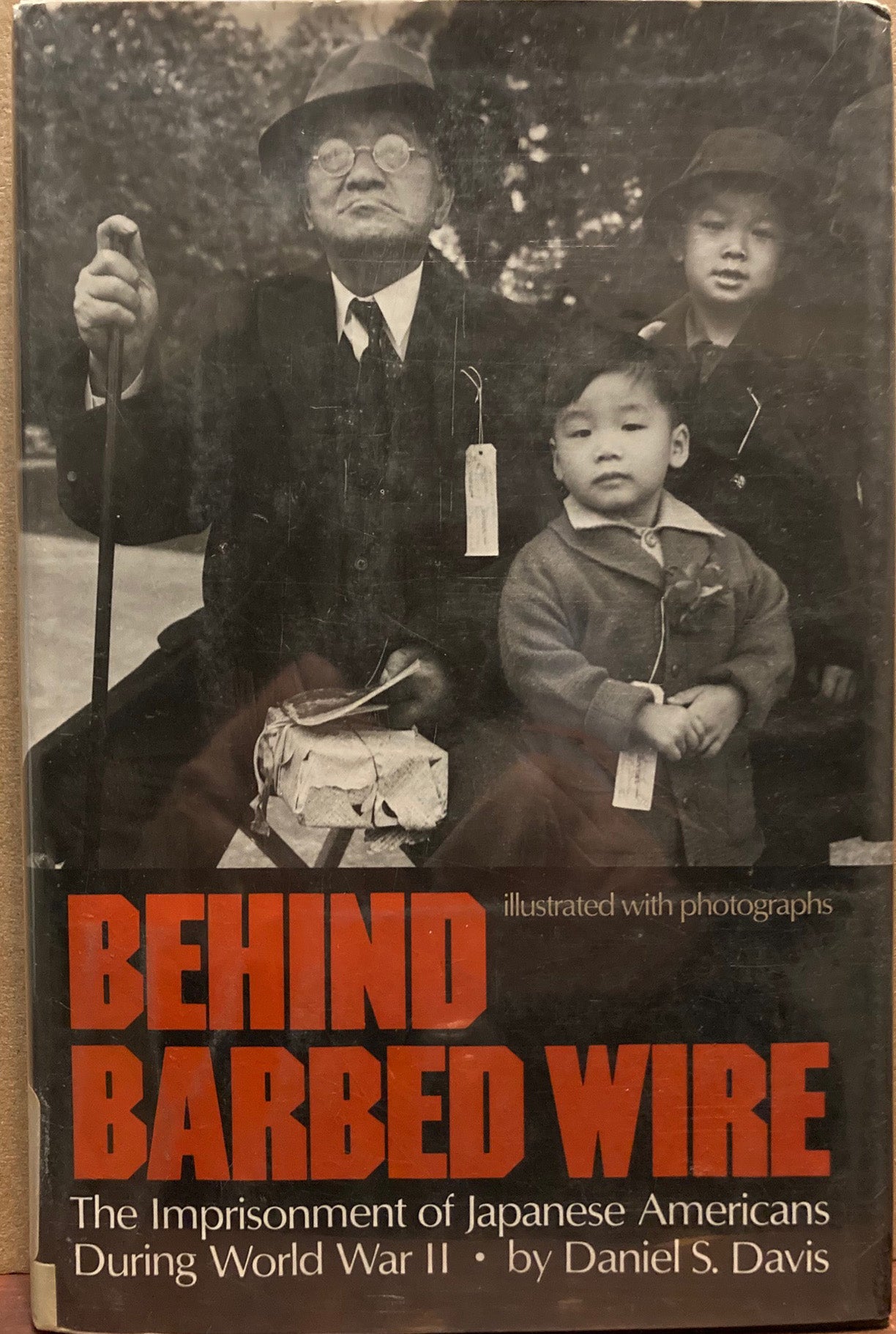
Lange, Dorothea, et al. Behind Barbed Wire: The Imprisonment of Japanese Americans During World War II by Daniel E. Davis.
Lange, Dorothea, et al. Behind Barbed Wire: The Imprisonment of Japanese Americans During World War II by Daniel E. Davis.
Impossible de charger la disponibilité du service de retrait
Dutton, 1982. [Photographs by Dorothea Lange; Francis Stewart; Charles E. Mace; Hikaru Iwasaki, et al.] Ex-library, hard cover, dust jacket protector attached to book, card pocket, spine label, otherwise VG+.
Behind Barbed Wire: The Imprisonment of Japanese Americans During World War II (published in 1982 by E.P. Dutton) is a foundational 166-page historical text written by author Daniel S. Davis. Aimed at young adult and general audiences, this Boston Globe–Horn Book Award-winning volume delivers a meticulous account of one of the most severe violations of constitutional rights in United States history, documenting the forced relocation and mass incarceration of over 110,000 people of Japanese ancestry following the attack on Pearl Harbor.
Core Themes and Content
-
The Path to Executive Order 9066: Davis traces the rapid breakdown of civil liberties following the December 7, 1941 attack on Pearl Harbor. The book examines how wartime panic, political pressure, and deeply ingrained West Coast anti-Japanese racism culminated in President Franklin D. Roosevelt signing Executive Order 9066, which authorized the military to bypass due process and strip Japanese Americans—the vast majority of whom were U.S. citizens—of their homes, businesses, and freedom.
-
Life in the Assembly Centers and Camps: The narrative vividly details the immediate logistical realities of the relocation, describing the initial movement to temporary "assembly centers" (often converted racetracks and fairgrounds) and their subsequent transfer to ten permanent, desolate relocation centers administered by the War Relocation Authority (WRA). Davis depicts the bleak daily life behind the barbed wire—communal mess halls, tarpaper barracks, extreme weather, and the psychological toll of being viewed as subversives.
-
The Paradox of Loyalty and War Service: A crucial focus of the book is the profound internal conflict faced by internees regarding patriotism and identity. Davis explores how, despite being imprisoned by their own government, thousands of young Japanese American men answered the call to serve in the armed forces, highlighting the legendary heroism of the segregated 100th Infantry Battalion and the 442nd Regimental Combat Team.
-
Post-War Reintegration and Visual Evidence: The text follows the gradual closing of the camps toward the end of the war, detailing the immense challenges former internees faced while attempting to pick up the pieces of their shattered lives and assimilate back into a hostile society. To anchor this history, the book incorporates evocative, archival photographic documentation from national archives, including the historic documentary photography of Dorothea Lange.
By examining the institutional failure of constitutional safeguards during periods of national hysteria, Behind Barbed Wireserves as a sobering cautionary tale about the fragility of democracy and a vital record of a dark chapter in the American experience.
Dorothea Lange (1895–1965) was a pioneering American documentary photographer and photojournalist whose empathetic, unflinching images profoundly shaped the visual legacy of the Great Depression and redefined the field of social documentary art. Born in Hoboken, New Jersey, Lange survived a childhood bout with polio that left her with a permanent limp—a physical vulnerability she later credited with forging her deep capacity to connect with people on the margins of society. After studying photography at Columbia University under Clarence H. White, she moved to San Francisco, where she ran a highly successful portrait studio catering to the city’s elite. However, as the economic devastation of the 1930s unfolded outside her door, she abandoned studio work to document the streets, catching the attention of the state-sponsored Farm Security Administration (FSA). Working alongside her husband, agricultural economist Paul Taylor, Lange traveled across the American West and South, capturing iconic, humanistic masterpieces like Migrant Mother that put a poignant face on the plight of displaced migrant workers and dust bowl refugees. Beyond her famous Depression-era work, she bravely documented the forced internment of Japanese-Americans during World War II and chronicled global communities for Life magazine, cementing her enduring legacy as a courageous visual activist who wielded her camera not merely as an artistic tool, but as a powerful instrument for social justice and institutional reform.
