Gary Saretzky Photo Books
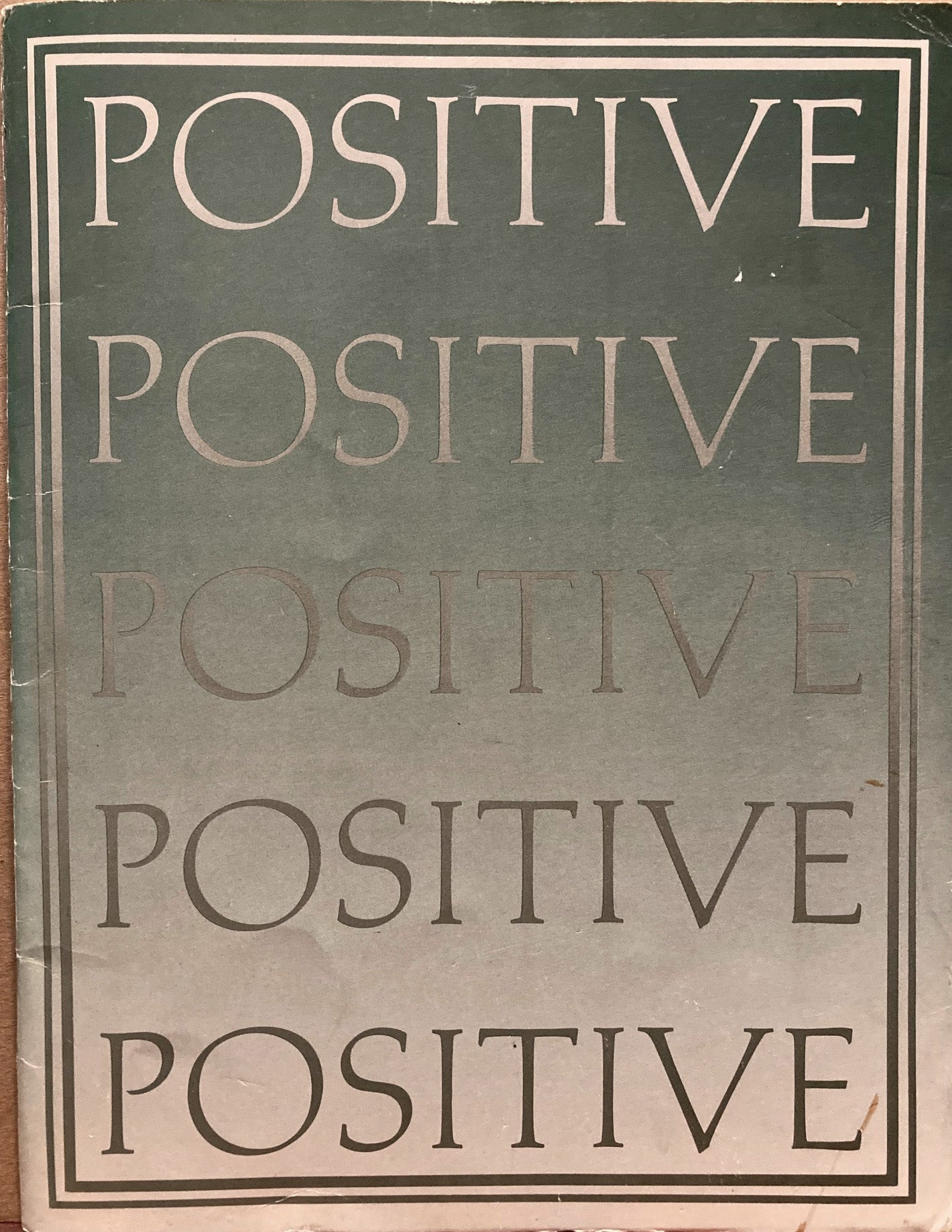
Positive, 1981-1982. Photography exhibition catalog from MIT.
Positive, 1981-1982. Photography exhibition catalog from MIT.
Impossible de charger la disponibilité du service de retrait
Creative Photography Laboratory, Massachusetts Institute of Technology, 1982. Introduction by Starr Ockenga. Articles by Andy Grundberg, Linda Benedict-Jones, Harold Edgerton, Gyorgy Kepes, Estelle Jussim; Michael Bishop, Terrence Crane, Hideji Nagura, and Stephen R. Milanowski. Topics include contemporary British photographers, strobe photography, Michael Bishop's slide lecture, and biases against color in photography. Photographs by Hideji Nagura; Terrence Crane; Michaela Rantoul Garzoni; Linda Benedict-Jones; and Stephen R. Milanowski. Wraps, 48 pages. Good with indentations on covers and footprints on pages 26, 28, and 30. No copies found for sale on Internet in June 2020 although a few of the 1980 edition of this series of books were available. Summary:
Positive, 1981–1982 is an exhibition catalog and student portfolio volume published by the Creative Photography Laboratory at the Massachusetts Institute of Technology (MIT) in 1982. Edited and introduced by acclaimed photographer and professor Starr Ockenga, who served as the director of the laboratory during this period, the publication documents the creative output, technical experimentation, and artistic philosophy driving MIT’s unique photography program at the start of the 1980s.
Core Themes & Institutional Context
1. The Creative Photography Laboratory at MIT
The publication serves as a primary record of the distinctive pedagogy developed within MIT's Creative Photography Laboratory, an influential incubator founded in 1965 by legendary photographer Minor White. By the early 1980s, under Starr Ockenga's leadership, the lab continued to bridge the gap between rigorous technical experimentation and deeply personal, expressive image-making, operating within a major scientific and technological institution.
2. Starr Ockenga's Curatorial Vision
In her introductory essay, Ockenga outlines the educational philosophies and artistic goals that shaped the 1981–1982 academic year. She contextualizes the diverse approaches of the contributing artists, emphasizing the importance of visual literacy, intellectual curiosity, and darkroom mastery. Her text highlights how the laboratory fostered an environment where photography was taught not just as a mechanical recording tool, but as a complex visual language capable of expressing subjective psychological truths.
3. Portfolio Diversity and Technological Transition
The core of the catalog showcases selected portfolios from students, fellows, and instructors connected to the laboratory during that academic cycle. The featured images reflect a transitional moment in American fine art photography, showcasing a wide range of styles from classic, formally structured black-and-white documentary work to emerging experimental formats and early color processes.
Positive, 1981–1982 stands as a vital institutional document capturing the legacy of Minor White’s foundational teachings as they evolved under a new generation of leadership. The catalog highlights a significant chapter in history when MIT was widely recognized not only for engineering and scientific innovation, but also as a vital vanguard center for contemporary fine art photography.
