Gary Saretzky Photo Books
Mathers, Michael. Riding the Rails by Michael Mathers. Documentary photography book.
Mathers, Michael. Riding the Rails by Michael Mathers. Documentary photography book.
Couldn't load pickup availability
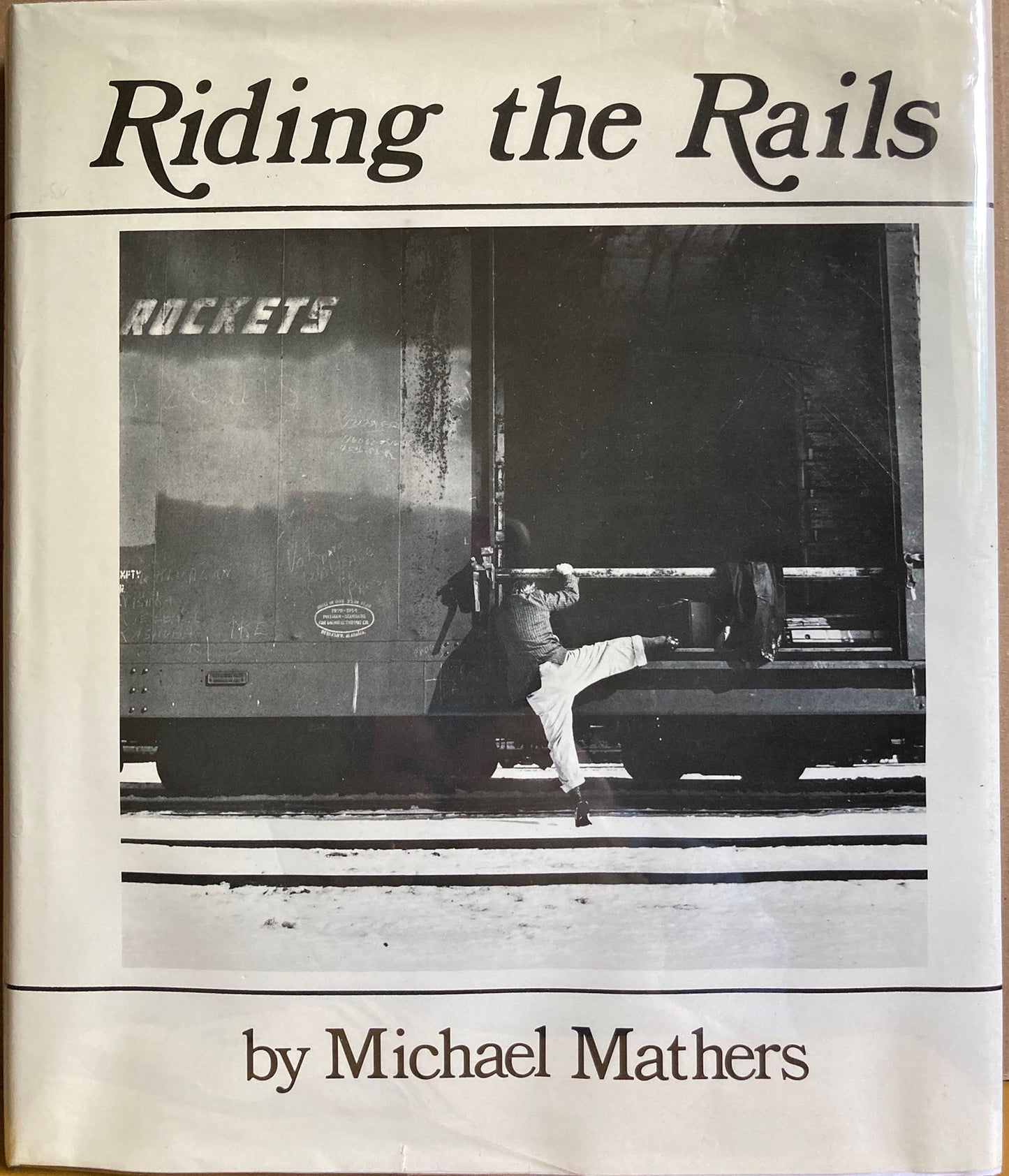
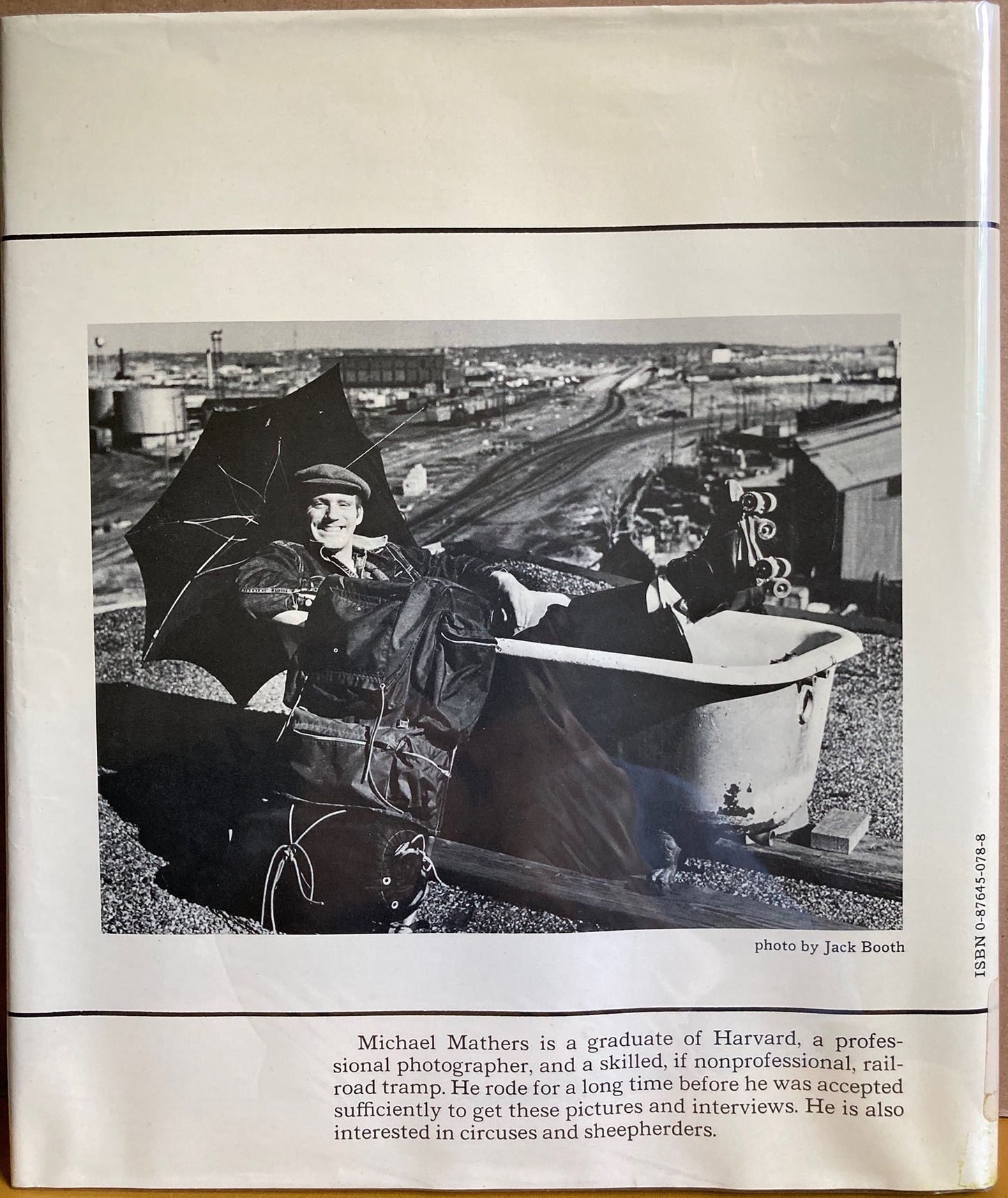
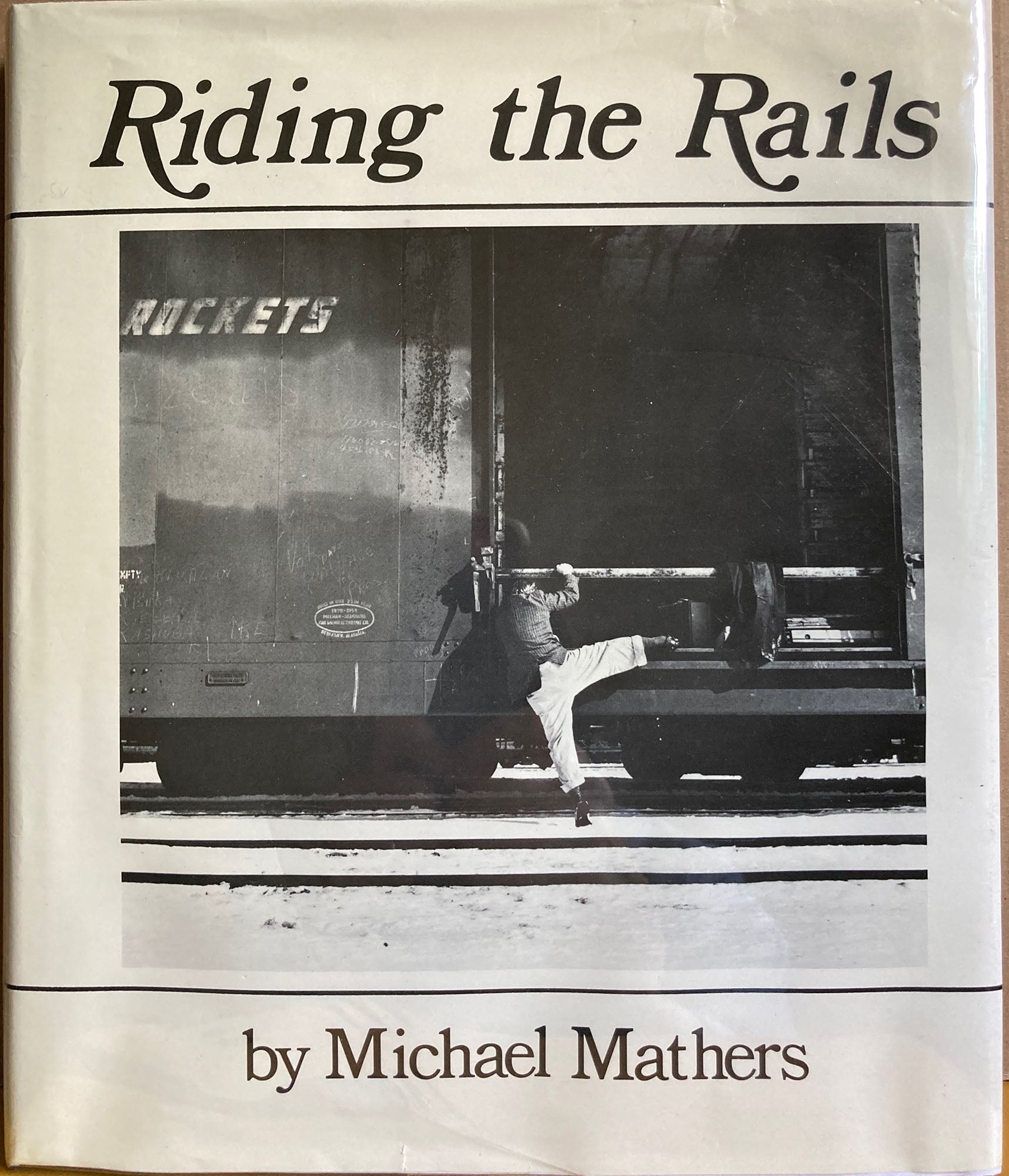
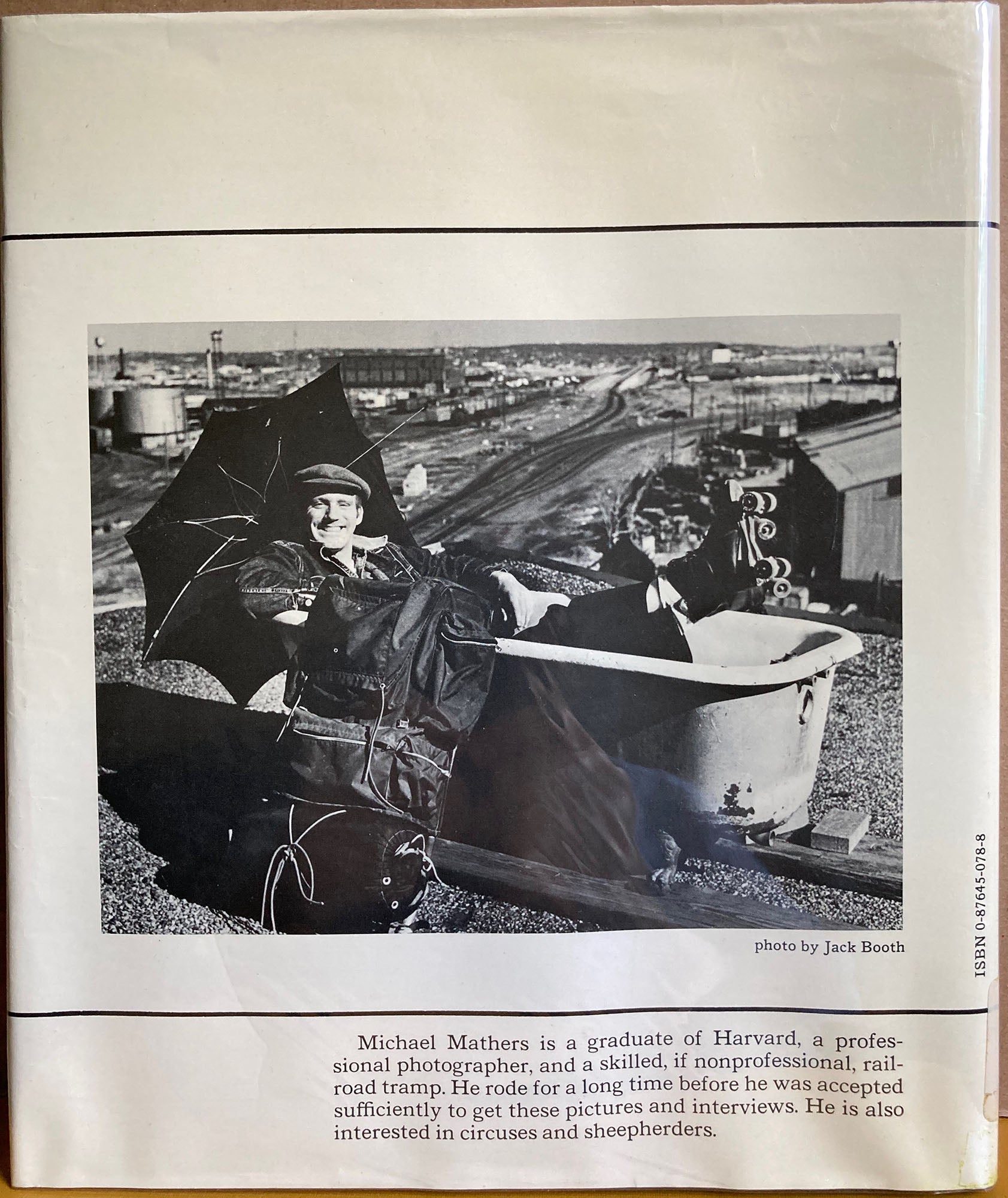
Gambit, 1973. First edition (later reprinted), ex-library hardcover with protected dust jacket. Photographs of and statements by homeless railroad tramps who ride the rails, with autobiographical text by Mathers who road the rails with them. Excellent example of documentary photography of wanderers. Tape stains on book where former dust jacket protector attached, lacking rear flyleaf, dust jacket very good with spine label. Front flap of dust jacket trimmed 1/4 inch but price still present. Library stamp at bottom of text block. 136 pages. Summary:
Riding the Rails (1973) is a gritty, immersive work of documentary photography and oral history by Michael Mathers. To create the book, Mathers spent several months "hoboing"—traveling across the United States by hopping freight trains—to capture the reality of a subculture that was rapidly fading from the American landscape.
Core Themes and Content
-
Life on the Road: Unlike romanticized versions of the "gentleman traveler," Mathers documents the harsh, dangerous, and often monotonous reality of the rails. His photographs capture the interiors of boxcars, "hobo jungles" (campsites), and the industrial vastness of the American railyards.
-
The People of the Rails: The book is as much about the individuals as it is about the trains. Mathers profiles a diverse cast of men—ranging from lifelong transients and alcoholics to young dropouts seeking adventure—recording their stories in their own words.
-
Black-and-White Realism: The photography is characterized by a raw, high-contrast style. Mathers uses available light to capture the grit of the coal dust and the weathered, leather-like skin of the men who spent decades outdoors.
Critical Significance
Published during the post-Vietnam era, the book arrived at a time when the traditional "hobo" lifestyle was being replaced by a new wave of modern homelessness and shifting economic structures. Mathers’ work can be compared to Harvey Wang’s Flophouse because both prioritize the dignity and the unfiltered voices of men living on the extreme margins of society.