Gary Saretzky Photo Books
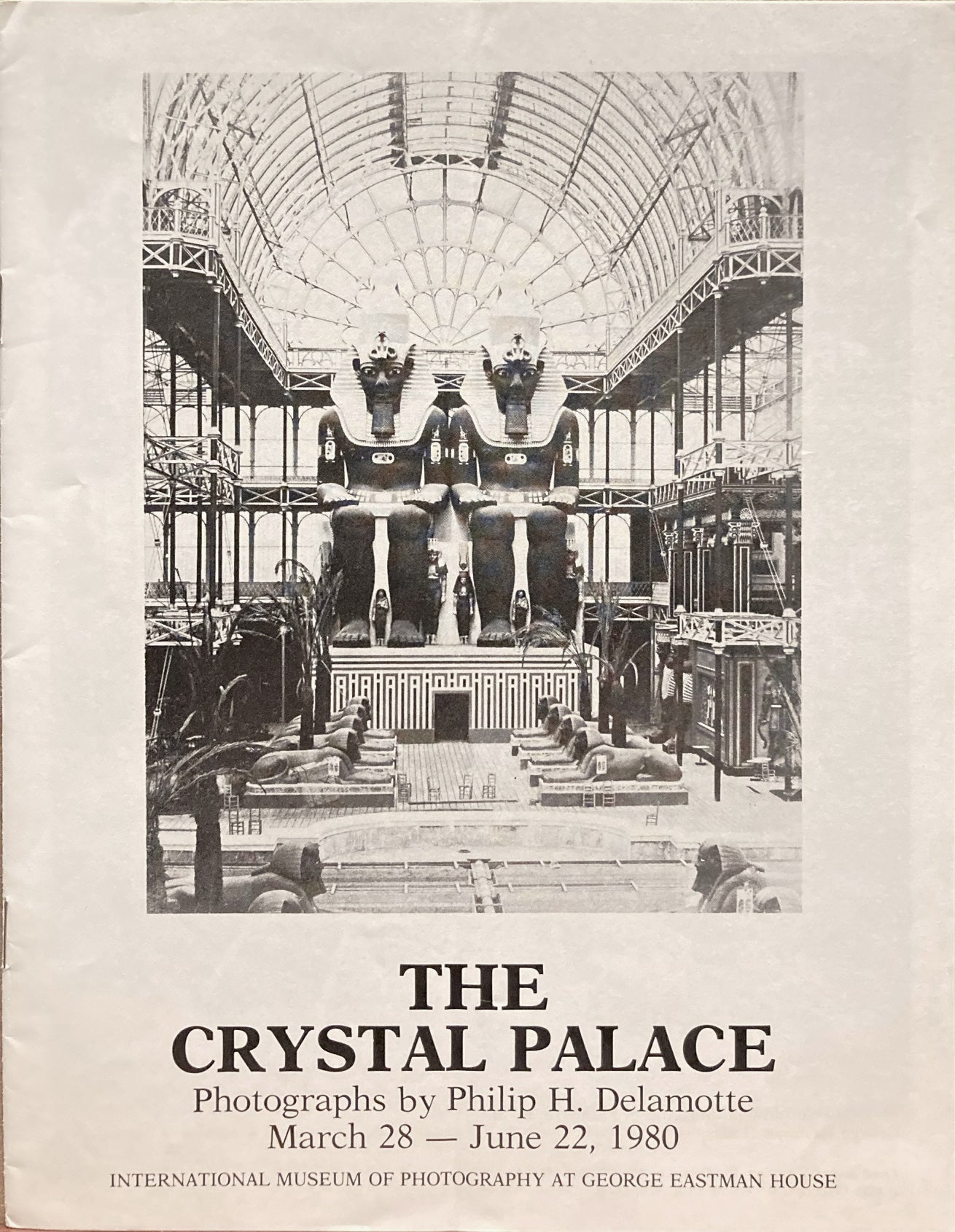
Delamotte, Philip H. The Crystal Palace. Photographs by Philip H. Delamotte, March 28-June 22, 1980.
Delamotte, Philip H. The Crystal Palace. Photographs by Philip H. Delamotte, March 28-June 22, 1980.
Impossible de charger la disponibilité du service de retrait
International Museum of Photography at George Eastman House. Essay by Janet E. Buerger. Wraps, 1980, 16 pages. [Catalog for exhibition of 62 prints from Delamotte's exceedingly rare portfolio of albumen prints, Photographic Reports of the Progress of the Works of the Crystal Palace and Gardens (1855). This catalog reproduces ten of the images, with an annotated list of all 62 and a list of 160 Photographic Reports of the Progress of the Works of the Crystal Palace and Gardens. The original Crystal Palace was built to house the first world fair held in London in 1851.] Good with moderate damage from mishandling by the U.S. Postal Service, including two short closed tears on rear cover and light vertical crimp through the center of all pages. Mailing label (to me) on rear cover. A serviceable copy of an uncommon photography catalog; no copies found for sale elsewhere. Summary:
The Crystal Palace: Photographs by Philip H. Delamotte (exhibited March 28–June 22, 1980) is an exhibition catalog published by the International Museum of Photography at George Eastman House in Rochester, New York. Featuring scholarship and an essay by photography historian Janet E. Buerger, the publication highlights British photographer Philip Henry Delamotte’s landmark 1850s visual record of London's iconic Crystal Palace.
Core Themes & Subject Matter
-
Pioneering Architectural Reportage: The catalog examines Delamotte’s official commission to document the dismantling of Sir Joseph Paxton’s glass-and-iron structure from Hyde Park and its re-erection at Sydenham Hill between 1852 and 1854. The series is widely recognized as one of the earliest systematic uses of photography for industrial progress reporting.
-
Celebration of Victorian Innovation: Delamotte captured the sheer scale of modern engineering—focusing on the prefabricated modular ironwork, sweeping scaffolding, and interior fine art courts—rendering the technological optimism of Victorian Britain in precise detail.
-
ataloging a Rare Masterpiece: The 16-page publication reproduces key images from the exhibition while providing an annotated checklist of the 62 prints on display, as well as a reference inventory of all 160 albumen photographs originally published in Delamotte’s rare two-volume 1855 portfolio, Photographic Views of the Progress of the Crystal Palace, Sydenham.
-
Aesthetic and Technical Mastery: Buerger’s essay explores Delamotte’s skill with early calotype and wet-collodion glass negatives, analyzing how his composition utilized light and linear perspective to emphasize the transparent, geometric architecture of the Palace.
Philip Henry Delamotte (1821–1889) was a British photographer, illustrator, and educator who became a pioneer of early architectural and documentary photography. Born at the Royal Military College in Sandhurst to an artistic family, he originally trained as an artist and engraver before turning to photography in the early 1850s. A founding member of the Calotype Club alongside Roger Fenton, Delamotte was among the first commercial photographers to embrace the calotype and wet-collodion processes to record major structural and cultural developments. His landmark commission recording the construction of the Crystal Palace at Sydenham (1852–1854) culminated in the 1855 publication of Photographic Views of the Progress of the Crystal Palace, Sydenham, one of the earliest books illustrated with photographic prints. In addition to publishing early photographic instruction manuals, Delamotte was appointed Professor of Drawing and Fine Art at King's College London in 1855, a post he held for over three decades while continuing to exert a profound influence on 19th-century visual culture.
