Gary Saretzky Photo Books
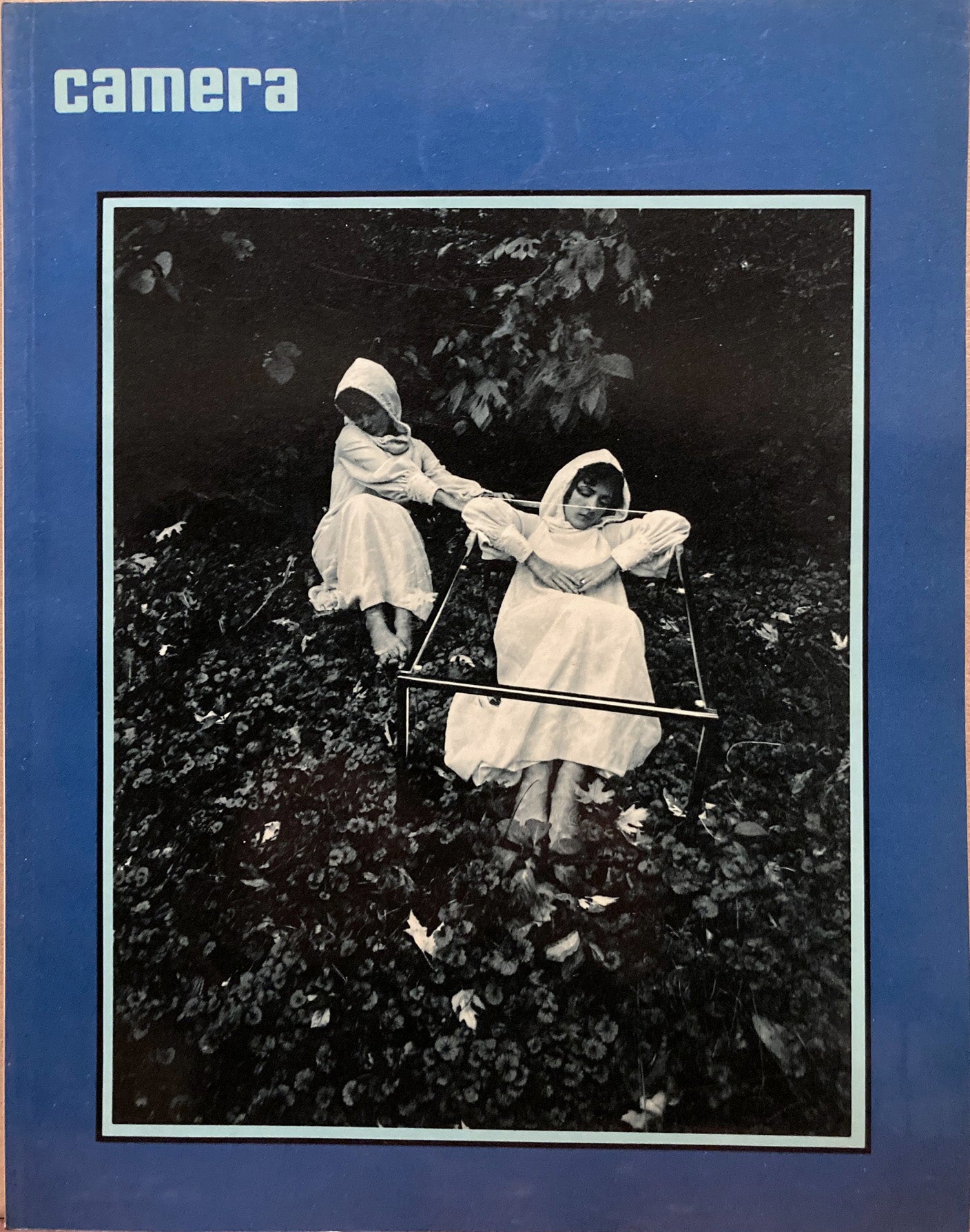
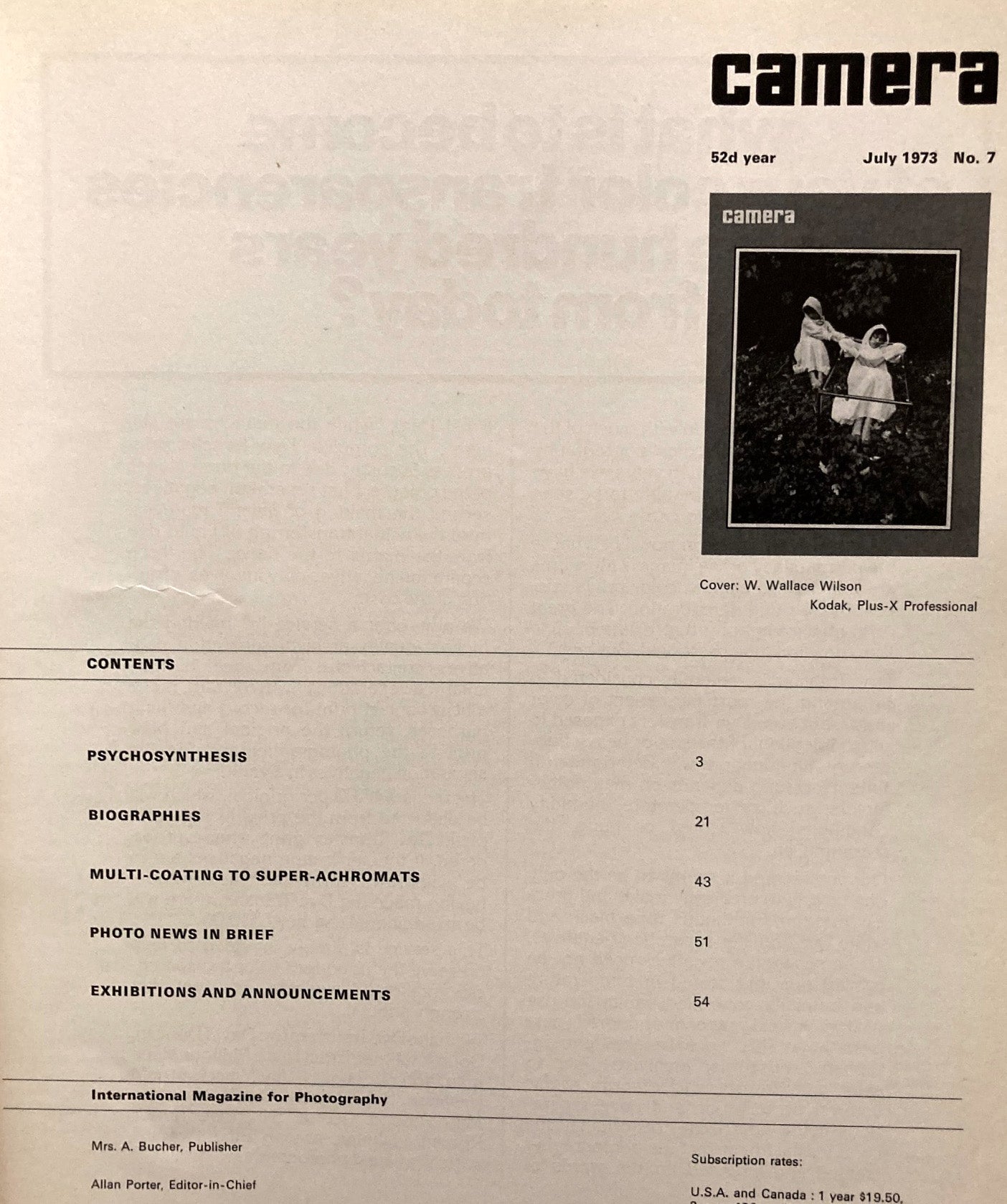
Camera, July 1973. Volume 52, No. 7. Psychosynthesis. James Nachtwey, et al.
Camera, July 1973. Volume 52, No. 7. Psychosynthesis. James Nachtwey, et al.
Impossible de charger la disponibilité du service de retrait
Edited by Allan Porter. Featuring James Nachtwey; Donna-Lee Phillips; Edward West; Hilton Braithwaite; W. Wallace Wilson; Laurent Jollet; Richard Humphrey; Joh Gahl; Horst Mujller; Gernot Huber; Paul Hoffman; Egons Spuris; Bruce Hart; John Weiss; Henry Horenstein; Virginia L. Blaisdell; Pamela Starsky; Ken Huston; John Edward Hafey, Jr.; Robert Jensen; Donald Waxman; Henri Cousineau; A. Michael Degtjarewsky; Brian Robert Smith; Heinz-Jurgen Gerke; Arthur H. Nishimura; Masamichi Someya; Giovanni Logeman; John Rushton Myers; David J. Kern; James C. Storm; James Henkel; Roger Vulliez. Includes nudes. VG+ with small crimps on cover. Summary:
The July 1973 issue of Camera (Volume 52, No. 7), titled "Psychosynthesis," explores photography as a tool for mapping internal psychological landscapes rather than merely documenting external reality. Under Allan Porter’s editorship, this issue presents the photograph as a synthesis of memory, perception, and the subconscious.
Revised Featured Portfolios
This edition highlights photographers who utilized the camera to manifest intangible mental structures, among others:
-
James Nachtwey: While later renowned as a preeminent war photographer, Nachtwey’s early inclusion here highlights a more formalist and introspective side of his vision, where the framing and starkness of the image reflect a specific psychological tension.
-
Donna Lee Phillips: Phillips’ work in this issue explores the intersection of language, sequence, and imagery. Her conceptual approach uses the photographic frame to investigate how we construct meaning and identity through visual cues.
-
Hilton Braithwaite: Braithwaite provides a visceral, often somber look at the human condition. His portfolio emphasizes tonal depth and shadow, treating his subjects as archetypal figures within a personal, symbolic narrative.
Key Concepts
-
Internal Mapping: The issue argues that a photograph is a "mental landscape," serving as a bridge between the artist’s inner consciousness and the outer world.
-
Constructed Reality: Moving away from traditional documentary styles, these artists prioritize the intentionality of the image, where every element is synthesized to evoke a specific emotional or intellectual state.
-
The Subjective Gaze: By featuring these specific portfolios, the magazine highlights a 1970s shift toward highly personal, autobiographical, and conceptual photography.
