Gary Saretzky Photo Books
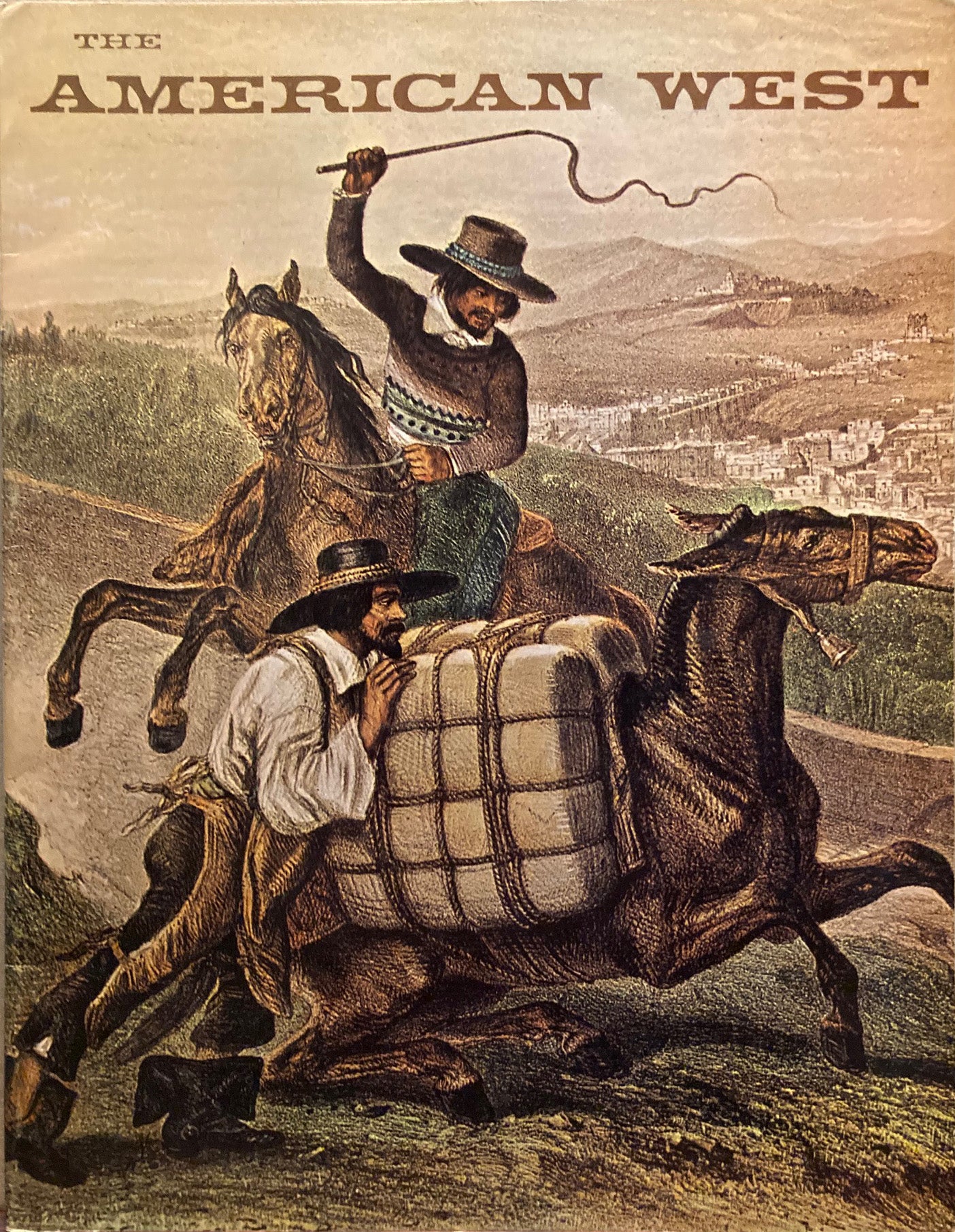
Vroman, Adam Clark. Adam Clark Vroman in The American West, 3:3, Summer 1966.
Vroman, Adam Clark. Adam Clark Vroman in The American West, 3:3, Summer 1966.
Impossible de charger la disponibilité du service de retrait
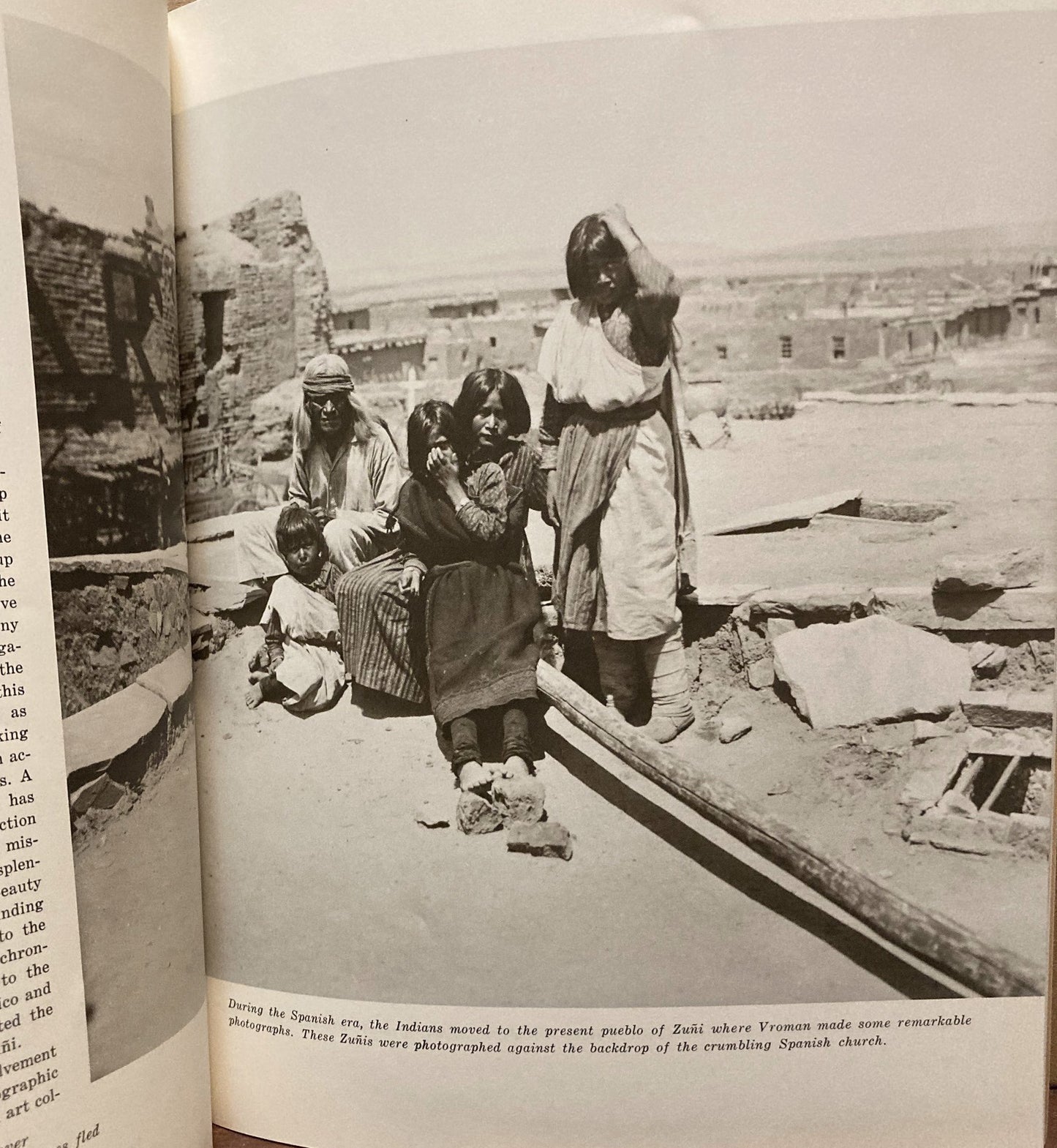
With 15 photographs by Adam Clark Vroman, pages 42-55, with an introduction by Ruth I. Mahood. Includes Vroman's "Zuni" and other photographs depicting Native American life. [Adam Clark Vroman (1856–1916), an amateur photographer and bookstore owner, made several expeditions to the Southwest from his home in Pasadena, California, to photograph the American Indians around 1900. His naturalistic style was quite different from that of his contemporary, Edward S. Curtis, whose work was influenced by Pictorialist aesthetics.] Complete issue, 96 pages, near fine.
Adam Clark Vroman (1856–1916) was an American photographer, bookseller, and collector renowned for his empathetic, respectful, and historically significant photographic studies of Native American communities and the Southwest landscape. Born in La Salle County, Illinois, Vroman worked for the railroad before moving to Pasadena, California, in 1892, where he co-founded a prominent bookstore that still bears his name today. Taking up photography in his late thirties, he made annual expeditions to the American Southwest between 1895 and 1904, systematically documenting the Hopi, Navajo, Zuni, and Pueblo peoples during a period of rapid cultural transition. Unlike many contemporary photographers who staged romanticized or exoticized images, Vroman approached his subjects with profound human dignity, producing straightforward, unmanipulated platinum prints that recorded daily life, architecture, and portraiture without romantic artifice. His extensive archive of glass-plate negatives remains a vital ethnographic and artistic record of late 19th- and early 20th-century Native American life, preserved in institutions such as the Los Angeles County Museum of Art and the Smithsonian Institution.
The American West (Volume 3, Number 3, Summer 1966), published by the Western History Association, is a significant issue of the highly regarded quarterly journal dedicated to the history and culture of the American frontier. This specific edition is prized for its substantial, visually driven feature on Adam Clark Vroman, a crucial figure in late-19th and early-20th-century documentary photography of the American Southwest.
The Adam Clark Vroman Feature (Pages 42–55)
The center of the issue is a 14-page portfolio showcasing 15 historic photographs by Vroman, accompanied by a biographical and critical introduction by Ruth I. Mahood (then the curator of history at the Los Angeles County Museum of Natural History).
-
The Zuni Portfolio and Beyond: The selection highlights Vroman's legendary expeditions between 1895 and 1904. It prominently features his profound documentations of the Zuni pueblo, alongside striking images of the Hopi and Navajo peoples.
-
Humanist Ethnography: Mahood's text emphasizes that unlike many of his contemporaries who staged or romanticized their subjects to fit a mythic narrative of the "vanishing Indian," Vroman approached Native American life with deep respect and unvarnished realism. His photographs capture daily domestic tasks, sacred rituals, and quiet portraits with sharp optical clarity and an absence of pictorial artifice.
-
Preserving the Record: The article contextualizes Vroman's work within the broader effort to rescue his original glass-plate negatives from obscurity, safeguarding a vital, empathetic ethnographic record of Southwestern indigenous communities before their cultures were fundamentally altered by modern encroachment.
Significance
The Summer 1966 issue of The American West remains an essential source for historians of both the American frontier and early documentary photography. By pairing Ruth I. Mahood's authoritative curation with Vroman’s intimate, sharp-focus portraits of the Zuni and Hopi peoples, the journal successfully elevated Vroman from a regional bookstore owner and hobbyist into the upper echelons of American humanitarian photojournalism.