Gary Saretzky Photo Books
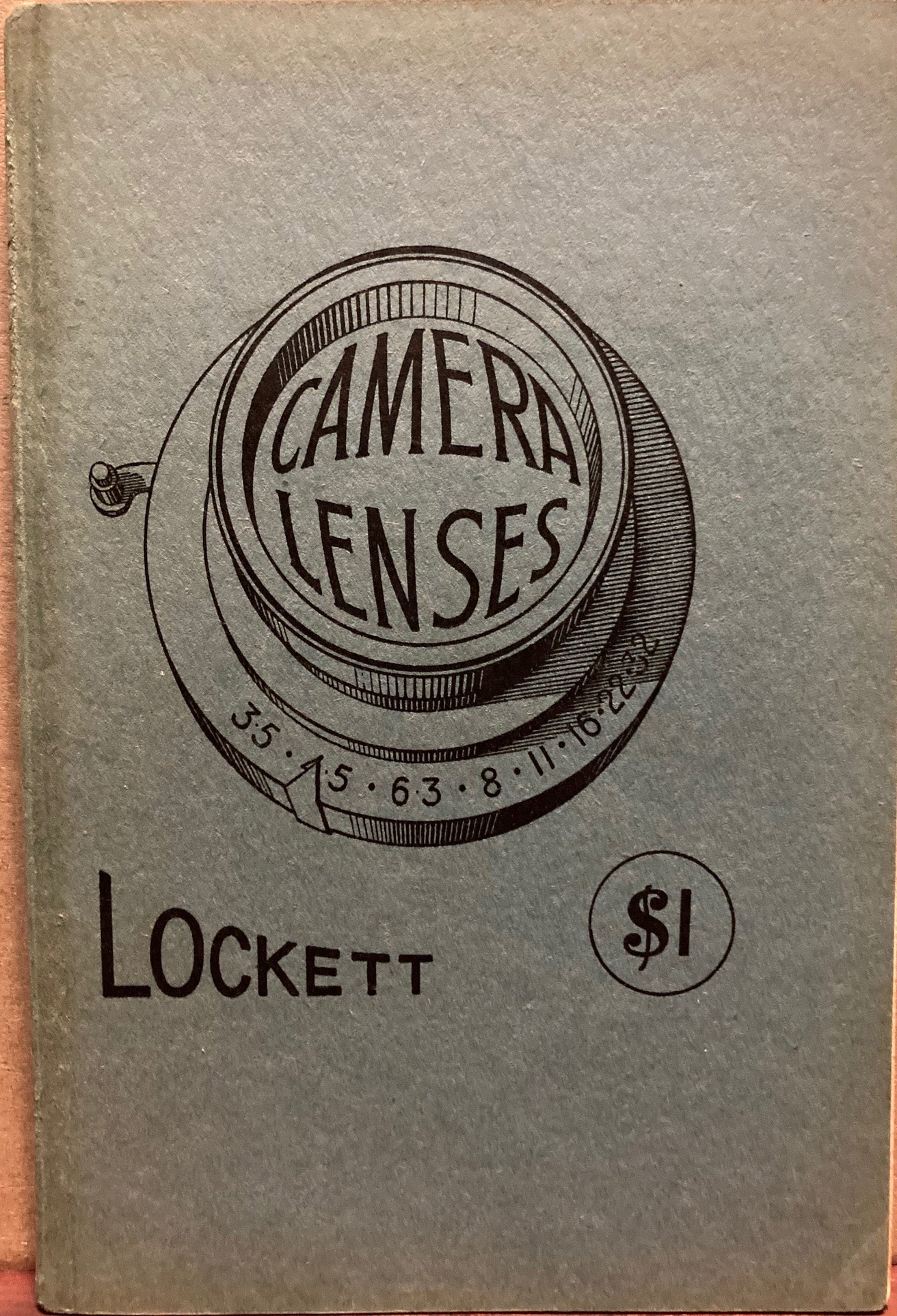
Optics. Camera Lenses, Second Edition, by Arthur Lockett and H.W. Lee.
Optics. Camera Lenses, Second Edition, by Arthur Lockett and H.W. Lee.
Impossible de charger la disponibilité du service de retrait
Pitman, 1937. Thorough treatment of how lenses work. Wraps, very good. Summary:
Camera Lenses: A Useful Handbook for Amateur and Professional Photographers, Second Edition (published by Sir Isaac Pitman & Sons, Ltd. in 1937) is a practical, technical guide to photographic optics. Originally written by Arthur Lockett and thoroughly revised for this second edition by renowned optical designer H.W. Lee, the textbook strips away dense, abstract mathematics to explain the mechanics, properties, and commercial varieties of camera lenses available during the interwar period.
Core Content & Technical Framework
1. Fundamentals of Photographic Optics
The handbook begins by establishing the foundational physics of light and refraction without overwhelming the reader with advanced equations. It outlines how light behaves when passing through different densities of optical glass and clarifies fundamental concepts critical to everyday camera operation:
-
Focal Length and Aperture: Explaining the relationship between a lens's physical dimensions, its field of view, and how the -number system dictates relative image brightness.
-
The Mechanics of Focusing: Detailing conjugates, hyperfocal distance, depth of field, and depth of focus, illustrating how to achieve maximum sharpness across varying subject planes.
2. Optical Aberrations and Corrections
A major focus of the text is detailing the inherent geometric and chromatic flaws that plague simple glass elements. The narrative categorizes these distortions and explains the structural configurations designers use to neutralize them:
-
Chromatic Aberration: The failure of different colors of light to focus at the same point, corrected through the pairing of crown and flint glass.
-
Geometric Distortions: Breaking down spherical aberration, coma, astigmatism, curvature of field, and curvilinear distortion (barrel and pincushion effects).
3. Classification of Commercial Lens Types
The volume functions as a comprehensive directory of historical and contemporary lens designs up to 1937. It guides the photographer through the evolving architecture of multi-element optical formulas, tracing their development from basic single lenses to complex, high-speed configurations:
-
Early Innovations: Looking back at the historical milestones of the Rapid Rectilinear and early symmetrical formulas.
-
The Anastigmat Revolution: Explaining how newer formulas completely eliminated astigmatism, providing crisp edge-to-edge sharpness.
-
Specialized Optics: Covering contemporary advances in portrait lenses, high-speed optics for low-light cinematography, wide-angle designs, and telephoto configurations.
4. Mechanical Accessories and Maintenance
The concluding sections shift from optical theory to physical hardware and routine lens care. The authors outline the mechanics of varying shutter mechanisms—including focal-plane and between-lens iris diaphragms—and explain the optical principles behind auxiliary attachments like tele-converters, supplementary close-up lenses, and color filters. Finally, the text offers practical troubleshooting advice for testing a lens's true performance, cleaning delicate glass surfaces, and diagnosing structural misalignments.
Released during a golden era of British and global camera manufacturing, the 1937 edition of Camera Lenses bridged the gap between academic physics and practical darkroom work. By pairing Arthur Lockett's accessible teaching style with H.W. Lee's professional expertise in high-performance optical engineering, Pitman delivered an indispensable, beautifully illustrated reference manual that helped a generation of photographers navigate the rapid technological transition into modern, large-aperture photography.